Digital vs paper quizzes: what works better?
Remember that moment in high school when you’d walk into class and see a stack of papers on the teacher’s desk? Your stomach would drop just a little. For me, it was Mrs. Alvarez’s...
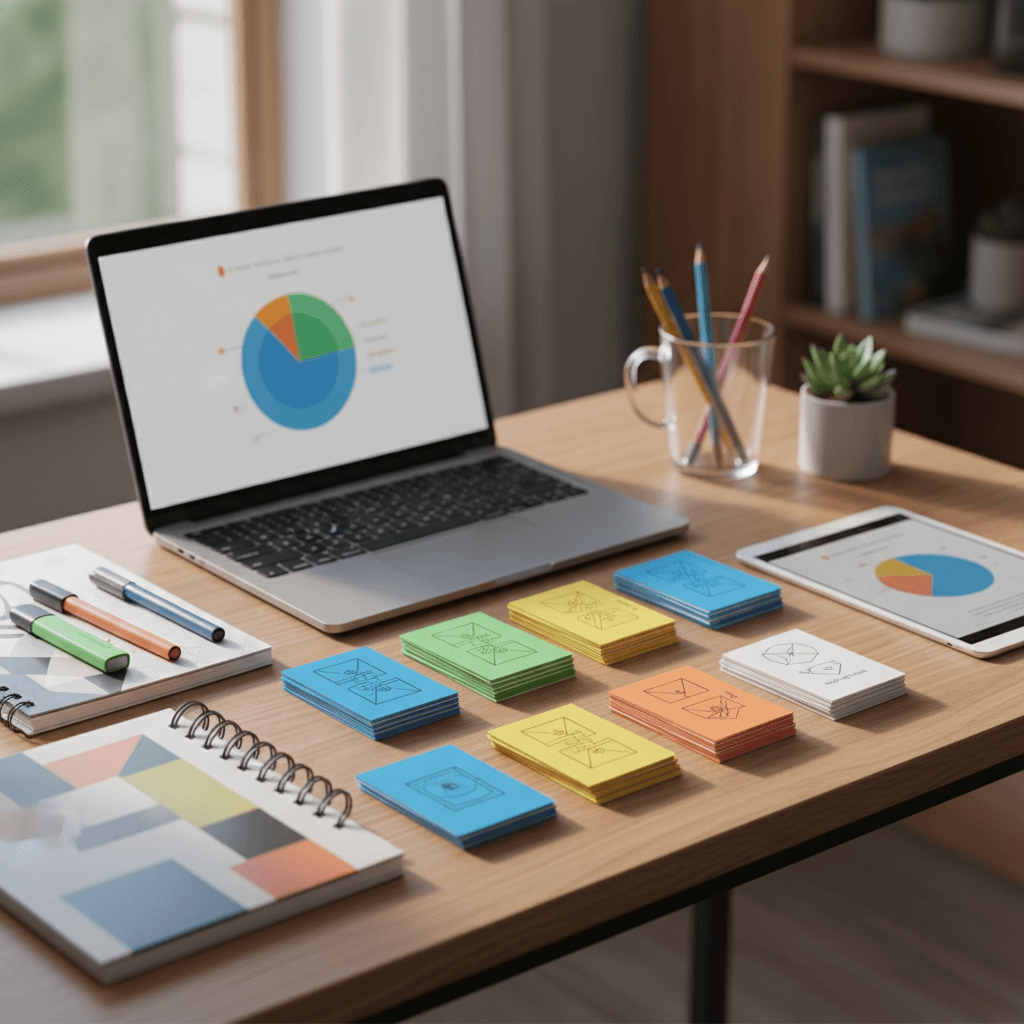
Remember that moment in high school when you’d walk into class and see a stack of papers on the teacher’s desk? Your stomach would drop just a little. For me, it was Mrs. Alvarez’s history class—the scent of freshly printed quizzes, the sound of pencils scratching, the quiet anxiety hanging in the air. Fast forward to today: I’m sitting in a university library, and the student next to me is tapping rapidly on their tablet, working through a digital quiz that adapts to their answers in real time. No paper, no pencil, just pixels and progress bars.
It got me thinking: which one is actually better? As both a student and an educator, I’ve lived on both sides of the quiz divide. And if you’re reading this, you’ve probably wondered the same thing. Do we stick with the classic, tactile experience of paper, or embrace the dynamic, data-driven world of digital quizzes? Let’s dig into this—not with dry research jargon, but with stories, experiences, and a honest look at what really helps us learn.
The Case for Paper: Familiarity, Focus, and the Physical Connection
There’s something almost meditative about taking a quiz on paper. You’re not fighting pop-up notifications or Wi-Fi lag; it’s just you, the question, and your thoughts. I’ll never forget my friend Lena, a visual learner who swore by her color-coded, handwritten notes and paper quizzes. She told me once, “When I write an answer down, it sticks. It feels like I’m having a conversation with the material.”
Paper quizzes encourage a certain kind of focus. They remove digital distractions and create a clean, intentional space for thinking. For subjects that require deep concentration—like solving math problems or analyzing literature—the simplicity of paper can be a real advantage. There’s also something to be said about the physical act of writing. Studies suggest that handwriting engages the brain differently than typing, potentially strengthening memory through what’s known as active recall—the process of actively retrieving information rather than passively reviewing it.
But paper isn’t perfect. Once you’ve turned in your quiz, it’s gone. You might get it back with a score and some red ink, but the feedback loop ends there. There’s no way to instantly review what you got wrong or right, and you certainly can’t retake it to reinforce your learning.
Going Digital: Adaptability, Instant Feedback, and Smarter Study Habits
Then there’s the digital side of things. I remember helping my nephew prepare for his biology midterm using an app that offered spaced repetition quizzes. Instead of cramming the night before, he was doing short, daily sessions that the tool tailored based on what he struggled with. By test day, he was calm and confident—not because he’d memorized everything, but because he’d truly learned it.
Digital quizzes bring two huge advantages to the table: adaptability and immediacy. Platforms like QuizSmart use algorithms to personalize your learning journey, emphasizing areas where you need the most practice. This isn’t just convenient; it’s backed by learning science. Spaced repetition, for instance, is a technique where questions reappear at increasing intervals to cement knowledge in your long-term memory. It’s incredibly effective, but nearly impossible to pull off with paper alone.
Then there’s the feedback. With digital tools, you know right away if you answered correctly, why the answer is what it is, and how you stack up against key concepts. This turns quizzes from mere assessments into learning moments. For teachers, digital platforms offer analytics that help identify class-wide trends, allowing them to adjust their instruction on the fly.
But digital isn’t without its downsides. Screen fatigue is real, and not every student has equal access to devices or reliable internet. There’s also the potential for distraction—one stray click and you’re scrolling through social media instead of solving equations.
Real-World Application: When Paper and Digital Shine
Let’s get practical. When should you use paper, and when should you go digital?
Take Mr. Davies, a high school chemistry teacher I met at an education conference. He uses paper quizzes for in-class, timed assessments because it ensures all his students are on a level playing field—no tech issues, no temptation to switch tabs. But for homework and review, he encourages his students to use QuizSmart for self-testing. The platform’s ability to shuffle questions and provide instant explanations helps reinforce concepts after class.
On the student side, I think of Maria, a college senior majoring in psychology. She uses digital quizzes for most of her test preparation because she can do them on her phone between classes or during breaks. But when she’s wrestling with particularly tough theories, she prints out quiz questions and writes her answers by hand. For her, mixing both methods has been a game-changer.
What works best often depends on the goal. If you’re practicing retrieval for long-term retention, digital tools with spaced repetition are hard to beat. If you’re aiming for deep focus or simulating a no-device test environment, paper is your friend.
So, Which Is Better?
Here’s the truth: it’s not about picking one over the other. The real magic happens when we use both intentionally. Paper gives us focus and tactile engagement; digital gives us adaptability and insight. The best quiz techniques often involve a blend—using digital tools for regular, low-stakes self-testing and paper for formal assessments or when you need to disconnect to concentrate.
What matters most isn’t the format, but how you use it. Are you engaging in active recall? Are you reviewing your mistakes? Are you consistent? Tools like QuizSmart can guide you, but you’re the one driving your learning.
So the next time you prepare for a test, think about what you need most in that moment. Maybe it’s a notebook and a pen. Maybe it’s your laptop and a smart quiz platform. Maybe it’s both. Whatever you choose, make it purposeful.
Because at the end of the day, it’s not about paper versus digital—it’s about learning versus just getting through.