Digital vs paper quizzes: what works better?
Remember that moment in class when the teacher announced a pop quiz and you heard that familiar rustle of paper being passed down the rows? There was something almost ceremonial ab...
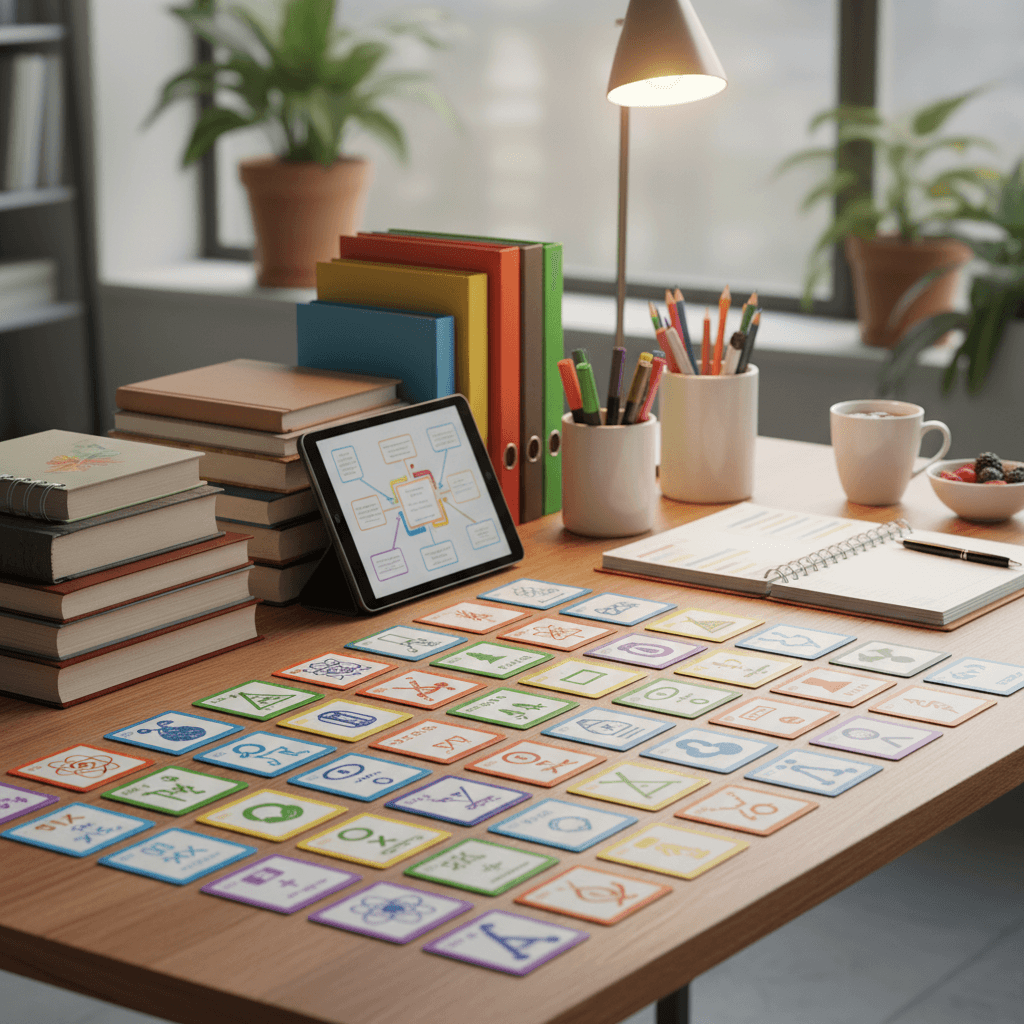
Remember that moment in class when the teacher announced a pop quiz and you heard that familiar rustle of paper being passed down the rows? There was something almost ceremonial about it—the crisp handout, the scent of fresh photocopies, the frantic scramble for a pen. Fast forward to today, and you’re just as likely to hear the gentle ping of a notification as your digital quiz appears on-screen.
I’ll never forget my high school biology teacher, Mr. Evans, who had a legendary filing cabinet filled with decades’ worth of paper quizzes. He could pull out a quiz from 1992 and proudly show us how the questions had evolved. Yet last month, I watched my niece take a geography quiz on her tablet, with interactive maps that came to life when she tapped them. It made me wonder: in our increasingly digital world, which approach actually helps us learn better?
This isn’t just about nostalgia versus innovation. It’s about what truly sticks—what turns short-term memorization into long-term understanding. Whether you’re a student trying to optimize your study sessions or an educator designing the next assessment, the choice between digital and paper quizzes matters more than you might think.
The Case for Paper: More Than Just Nostalgia
There’s something uniquely tangible about paper quizzes that goes beyond simple tradition. I noticed this while helping my friend’s daughter study for her history midterms. She’d created what she called her “quiz wall”—a mosaic of handwritten practice tests and corrections taped across her bedroom wall. She could literally point to where she’d struggled with dates of the Civil War, and trace her progress as her corrections became fewer.
Research suggests this physical interaction might be more than just satisfying—it could be neurologically beneficial. The act of writing by hand engages different parts of our brain compared to typing. When you jot down an answer on paper, you’re creating a physical memory trace that many learners find helps with retention. It’s why I still see medical students carrying around flashcards despite having every app imaginable on their phones.
Paper quizzes also create what I call “focused space”—no notifications, no temptation to switch tabs, just you and the material. My college roommate, who now teaches middle school English, still uses paper quizzes for precisely this reason. “For those twenty minutes,” she told me recently, “my students aren’t thinking about Instagram or TikTok. They’re fully present with Shakespeare.”
The Digital Advantage: Beyond Convenience
But let’s be honest—digital quizzes bring capabilities that paper simply can’t match. I saw this powerfully demonstrated when my friend David, a chemistry professor, switched to digital quizzes during the pandemic. What started as necessity became revelation. His platform could immediately generate different versions of the same quiz to prevent cheating, provide instant feedback, and even analyze patterns in wrong answers across the entire class.
The real magic happens with active recall and spaced repetition—two of the most effective learning techniques we know. Digital tools can automate these processes in ways that would be incredibly time-consuming on paper. Imagine a system that knows exactly when you’re about to forget something and serves up just the right question to strengthen that memory.
This is where tools like QuizSmart become particularly valuable. Instead of just taking static quizzes, students can engage in dynamic self-testing that adapts to their progress. The platform uses algorithms to determine optimal timing for review, turning casual quiz-taking into strategic test preparation.
The most powerful aspect of digital quizzes isn’t the technology itself, but how it can personalize the learning journey for each student.
What the Research Tells Us About Learning
When we look beyond the paper-versus-screen debate, something interesting emerges: the medium matters less than the method. Whether digital or paper, the most effective quizzes share certain characteristics.
The key is what psychologists call desirable difficulty—the idea that learning should feel challenging but not impossible. Good quizzes make you work to retrieve information, strengthening those neural pathways regardless of whether you’re writing with a pencil or tapping on a keyboard.
What surprised me while researching this topic was discovering that many effective quiz techniques work equally well in both formats. The critical factor is whether the quiz makes you think deeply, connects to what you already know, and provides useful feedback. A poorly designed digital quiz with vague questions and no explanation of answers will be less effective than a well-crafted paper quiz that makes you understand why you got something wrong.
Real Classrooms, Real Choices
Let me share two stories that show how this plays out in actual learning environments.
First, there’s Maya, a high school sophomore I tutored last semester. She struggled with biology until her teacher implemented a hybrid approach. They’d take paper quizzes in class for focused, distraction-free assessment, but use digital platforms like QuizSmart for at-home practice. The digital system tracked which concepts needed review and created customized practice sets. Maya’s test scores improved dramatically, not because of the technology alone, but because the combination gave her both concentration and customization.
Then there’s Mr. Henderson, who teaches AP U.S. History at a school where every student has a laptop. He told me about his “gradual reveal” technique—he starts units with paper quizzes to ensure foundational knowledge, then moves to digital quizzes that incorporate primary source documents and interactive timelines. The paper builds the base; the digital expands the application.
Finding Your Balance
So where does this leave us? After talking with dozens of students and educators, and reflecting on my own learning experiences, I’ve come to believe the most effective approach is often a blend.
Paper quizzes excel at creating focused, memorable assessment experiences. There’s a physicality to them that many learners find helpful for certain types of material. Digital quizzes offer adaptability, instant feedback, and the ability to scale effective learning techniques like spaced repetition.
The best quiz strategy might be asking yourself: what am I trying to achieve right now? If it’s deep focus on complex problems, paper might serve you better. If it’s efficient practice with adaptive difficulty, digital could be your answer. Many successful students and educators I know use both strategically.
What matters most isn’t the medium, but the thought behind it. Are you using quizzes as mere assessments, or as active learning tools? Are you reviewing your mistakes and understanding why you got questions wrong? Are you spacing out your practice rather than cramming?
The next time you prepare for a test or design a classroom assessment, consider what each format offers. Maybe you’ll create paper quizzes for in-class exams but use digital tools for review. Perhaps you’ll find that different subjects work better with different approaches.
The goal isn’t to choose sides in the paper versus digital debate, but to choose learning. And sometimes, the richest learning happens when we’re smart enough to use all the tools available to us.
What’s been your experience with different quiz formats? I’d love to hear what combinations have worked in your learning or teaching journey.