Group quiz strategies for collaborative learning
Remember that time in high school when your teacher announced a group quiz and half the class groaned while the other half secretly celebrated? I certainly do. There was always tha...
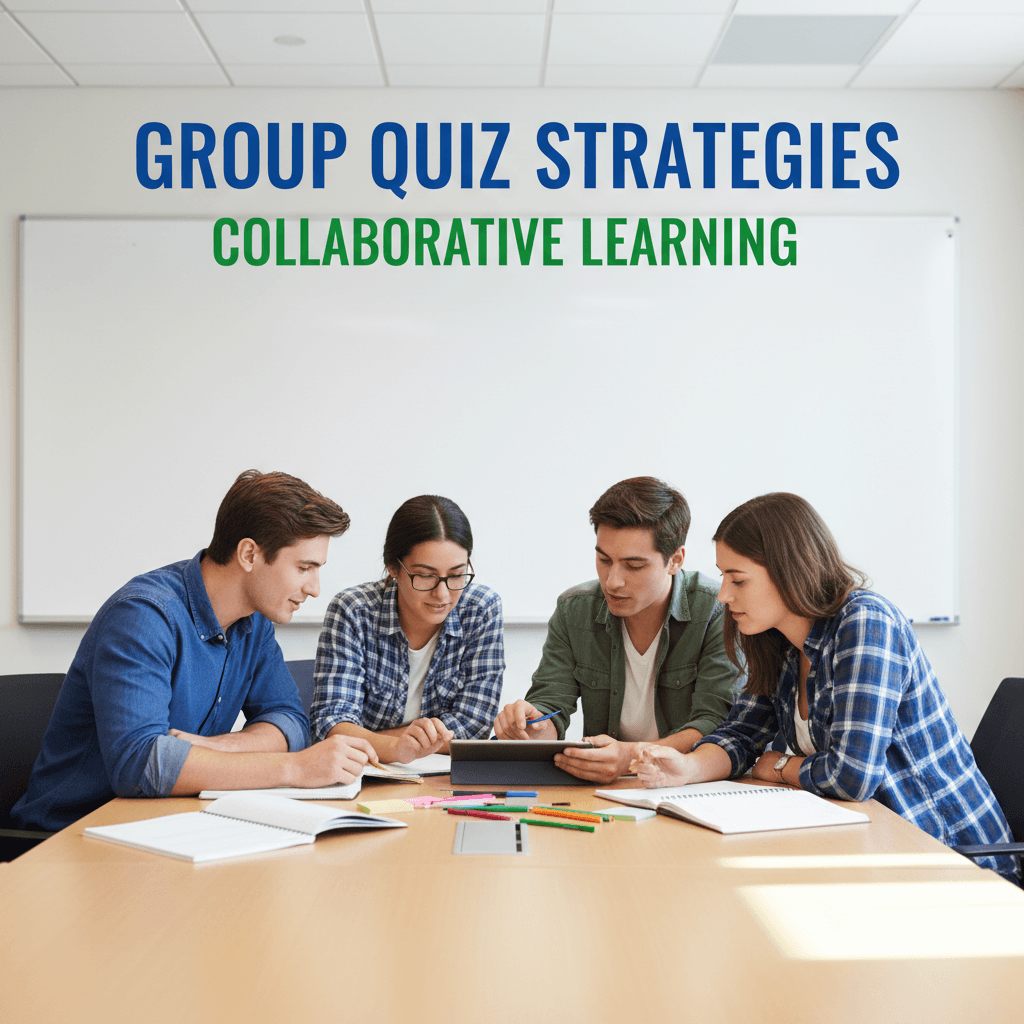
Remember that time in high school when your teacher announced a group quiz and half the class groaned while the other half secretly celebrated? I certainly do. There was always that one student who’d whisper, “I didn’t study at all,” and another who’d already highlighted every important line in the textbook. Group quizzes can feel like a mixed bag—sometimes chaotic, sometimes surprisingly effective. But what if I told you that when done right, group quizzes aren’t just an assessment tool? They’re one of the most powerful ways to learn collaboratively, turning individual uncertainty into collective clarity.
I’ll never forget my college psychology class, where Dr. Evans introduced group quizzes not as a test, but as a conversation. We’d huddle around tables, debating concepts like cognitive dissonance or the nuances of operant conditioning. It was in those moments of explaining, questioning, and even disagreeing that the material truly stuck. That’s the magic of collaborative learning—it turns passive absorption into active engagement. And today, we’re diving into how you, whether you’re a student or an educator, can harness that magic.
Why Group Quizzes Work: More Than Just Shared Answers
At first glance, group quizzes might seem like a way to divide the work—one person tackles the multiple-choice, another handles the short answers. But the real value isn’t in the division of labor; it’s in the synthesis of understanding. When you explain a concept to someone else, you’re not just regurgitating information. You’re reconstructing it, making sense of it in your own words, and solidifying it in your memory. This process, known as active recall, is one of the most effective quiz techniques out there.
Think about it: how often have you thought you knew something until you tried to teach it? I remember working with a study group in organic chemistry—a subject that felt like learning a new language. One of my peers, Maya, struggled with reaction mechanisms until she started drawing them out for the rest of us. By teaching, she was learning. And by listening, we were reinforcing our own understanding. That’s the beauty of collaboration—it turns individual gaps into group strengths.
Educators, this is where you come in. Structuring group quizzes to encourage discussion rather than just answer-sharing is key. Instead of simply grading the final product, consider evaluating the process. How are students negotiating answers? Are they challenging each other’s assumptions? These are the skills that translate beyond the classroom.
Making Group Quizzes Work: Strategies for Students and Educators
So, how do you make sure group quizzes are productive rather than chaotic? It starts with intentional design and participation. For students, it’s about embracing the mindset that you’re there to learn together, not just to finish quickly. For educators, it’s about creating an environment where collaboration thrives.
Let’s talk about one of my favorite strategies: the “think-pair-share” model. In this approach, students first attempt questions individually (think), then discuss their answers in small groups (pair), and finally share their insights with the larger class (share). This structure ensures that everyone engages with the material personally before leaning on the group. It also prevents one or two students from dominating the conversation.
Another critical element is incorporating spaced repetition and self-testing into the mix. Group quizzes shouldn’t be a one-off event. Instead, they can serve as checkpoints in a broader study plan. For example, after a group session, students can use tools like QuizSmart to create personalized follow-up quizzes based on the topics they found most challenging. This reinforces learning through repetition and helps identify areas that need more attention.
Here are a few practical tips for making group quizzes effective:
- Set clear roles: Designate a facilitator, a note-taker, and a timekeeper to keep discussions focused.
- Encourage debate: Remind students that disagreement is okay—it’s often where the deepest learning happens.
- Mix ability levels: Groups with diverse strengths foster peer teaching and reduce the “free-rider” effect.

Real-World Application: Stories from the Classroom
I once observed a middle school science class where the teacher, Ms. Rivera, used group quizzes to review for a unit on ecosystems. She divided her students into teams and gave each group a set of questions, but with a twist: they couldn’t just write down answers. They had to create a visual concept map linking their responses. The room buzzed with energy as students debated connections between predators and prey, discussed the impact of human activity, and even drew illustrations to explain their reasoning. By the end, they weren’t just memorizing facts—they were building understanding.
In higher education, I’ve seen professors use group quizzes as a low-stakes way to introduce complex topics. In a law school seminar, students worked in teams to analyze case studies, arguing different perspectives before arriving at a consensus. This not only deepened their comprehension but also built their confidence in articulating legal reasoning. One student told me, “I used to dread cold calls, but group quizzes made me feel like I had a support system.”
Tools like QuizSmart can elevate these experiences by providing a platform for creating, sharing, and reviewing quizzes. Imagine finishing a group session and instantly generating a personalized quiz based on the topics your group struggled with. That’s the kind of seamless integration that makes test preparation feel less like a chore and more like a collaborative journey.
Bringing It All Together
Group quizzes, when designed with care, transform learning from a solitary task into a shared adventure. They tap into the power of collaboration, making studying more dynamic, engaging, and effective. For students, they offer a chance to learn from peers and solidify knowledge through teaching. For educators, they provide a window into how students think and collaborate.
So, whether you’re prepping for a final exam or designing your next classroom activity, remember that the goal isn’t just to get the right answers—it’s to build understanding together. Give group quizzes a try, and don’t be afraid to experiment with formats, tools, and group dynamics. You might just find that the best learning happens when we do it side by side.
Now, go gather your group, fire up QuizSmart, and turn your next study session into a conversation. You’ve got this.