How AI is revolutionizing personalized learning
Remember that student in your class who always seemed to get things instantly while you were still scratching your head? Or that lesson where half the students were bored because t...
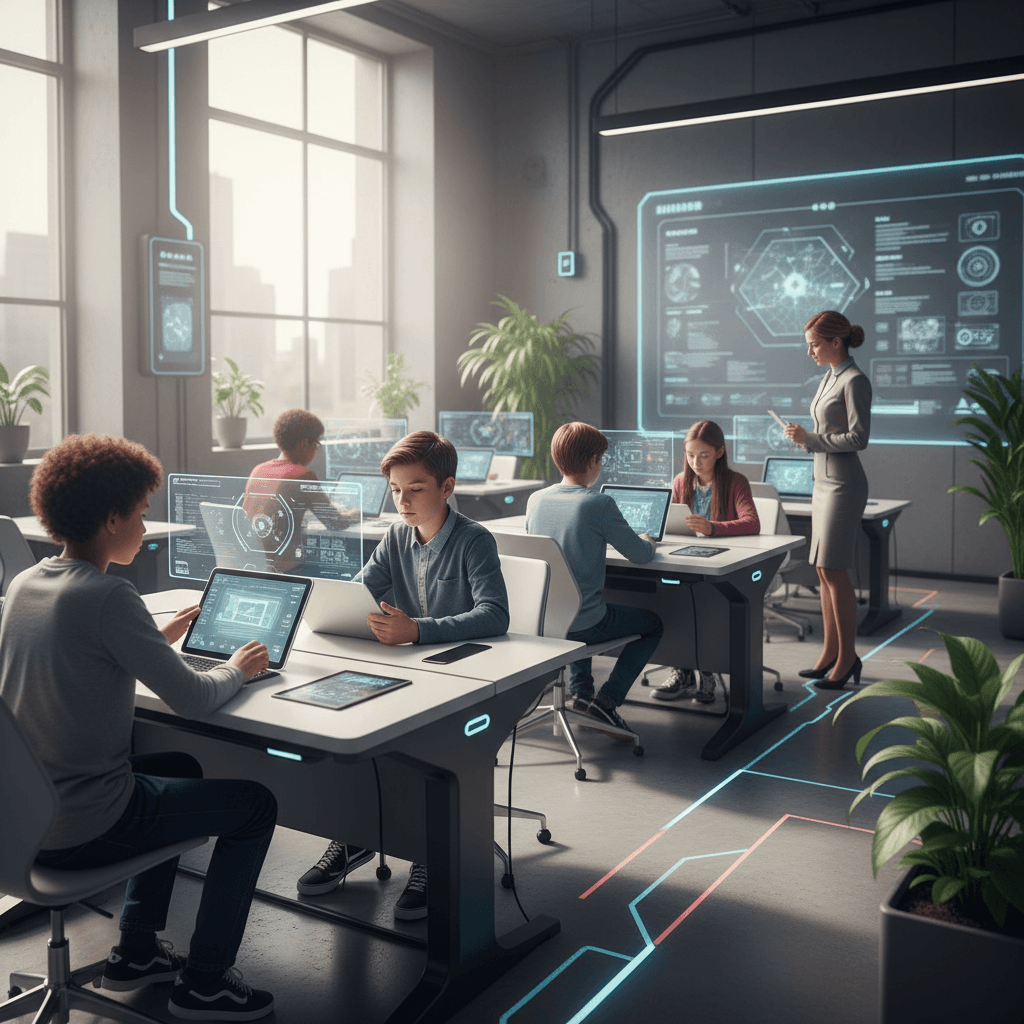
Remember that student in your class who always seemed to get things instantly while you were still scratching your head? Or that lesson where half the students were bored because they’d already mastered the material, while the other half were completely lost? For centuries, education has been a one-size-fits-all endeavor, despite every teacher knowing that no two learners are alike.
I’ll never forget my ninth-grade algebra class. Mrs. Thompson was wonderful, but she had thirty of us, each struggling with different concepts. I was stuck on quadratic equations while my friend Sarah had moved on to more advanced problems out of sheer boredom. We were all marching to the same beat, even though we needed completely different rhythms. This isn’t a criticism of Mrs. Thompson—she was doing exactly what the system demanded. But what if the system could adapt to each of us individually?
That’s exactly what’s happening right now in classrooms and learning platforms around the world. Artificial intelligence education is transforming the traditional learning landscape, creating experiences that respond to individual needs in ways that were once the stuff of science fiction.
The Tutor Who Never Sleeps: How AI Understands Your Learning Style
Think about the best tutor you ever had—maybe it was a patient family member or a teacher who just “got” how you learned. They knew when to challenge you, when to slow down, what examples would click for you. Now imagine that tutor available 24/7, with infinite patience and the ability to remember every concept you’ve ever struggled with.
That’s the promise of AI learning systems. These platforms use machine learning algorithms that analyze how you interact with material—which questions you answer correctly, how long you take, what types of problems cause hesitation. Like a detective piecing together clues, the system builds a unique profile of your learning patterns.
I recently watched my niece using an adaptive learning platform for math. When she struggled with fractions, the system didn’t just mark her wrong and move on. It recognized this was a pattern—she’d also had trouble with similar concepts weeks earlier. So it served up a quick review of foundational skills, then provided alternative explanations until one finally “clicked.” The beauty was in its patience—no judgment, no rushing, just persistent support until she achieved mastery.
Beyond the Red Pen: How Educational Technology Provides Meaningful Feedback
Traditional assessment has always been about right or wrong answers, but AI-driven systems understand that the journey matters as much as the destination. They can identify not just what you got wrong, but why you might have gotten it wrong—misunderstood a fundamental concept, made a simple calculation error, or missed a key piece of information.
This is where tools like QuizSmart demonstrate the power of smart tutoring. Instead of just testing knowledge, they help build it through intelligent questioning that adapts to your performance. If you’re consistently missing questions about a specific historical period, the system might introduce additional reading materials or present the information through different mediums—perhaps a short video or interactive timeline.
The most powerful educational technology doesn’t just assess what students know—it understands how they think.
This approach transforms assessment from something that happens to students into something that happens for them. The feedback becomes constructive rather than critical, guiding rather than grading.
Real-World Classrooms: Stories of Transformation
Mr. Rodriguez, a high school science teacher in Chicago, shared how AI tools have changed his classroom. “I used to spend hours creating different versions of tests and assignments,” he told me. “Now, the AI system automatically generates personalized problem sets based on each student’s current level. The student who struggled with basic chemistry concepts gets reinforcement exercises, while the advanced student tackles more complex applications.”
Then there’s Maria, a college student balancing coursework with a part-time job. “The smart tutoring system I use knows my schedule and energy patterns,” she explained. “It suggests shorter, more frequent sessions during busy weeks and knows I learn better through visual examples in the evenings when I’m tired. It’s like having a study partner who actually knows how I learn best.”
Perhaps most touching was the story of a special education teacher using AI to help non-verbal students communicate their understanding through alternative means. The system learned to recognize patterns in how these students interacted with material, providing teachers with insights into comprehension that traditional testing could never reveal.
The Human Touch in an AI World
Some educators worry that AI might replace teachers, but the most successful implementations show the opposite—AI handles the repetitive, data-driven tasks, freeing teachers to do what only humans can: inspire, mentor, and connect.
Mrs. Chen, an elementary school teacher, put it beautifully: “The AI system tells me that Jason is struggling with reading comprehension when faced with longer passages. But I’m the one who can sit with Jason, learn about his interests, and find books that will captivate him. The technology gives me the information, but the teaching remains deeply human.”
This partnership between human intuition and machine intelligence creates learning environments where students get both the personalized pace of AI and the motivational support of caring educators.
Where Do We Go From Here?
The revolution in personalized learning is just beginning. As AI systems become more sophisticated, they’ll better understand not just what we know, but how we feel about learning—recognizing frustration before it becomes discouragement, sensing curiosity and feeding it with just the right content.
The call to action isn’t just for developers and policymakers—it’s for all of us in education. Be curious about these tools. Experiment with them. Share what works. The most powerful applications of AI in education will come from educators and students collaborating to shape these technologies into tools that truly serve human learning.
That algebra class I mentioned earlier? Today, an AI tutor could have given me the extra practice I needed with quadratic equations while challenging Sarah with more advanced material. Mrs. Thompson could have used the data to form small groups for targeted instruction. The classroom could have become exactly what every learning space should be: a place where every student gets what they need, when they need it.
The future of education isn’t about replacing teachers with robots—it’s about empowering both students and educators with tools that finally make personalized learning possible at scale. And that’s a revolution worth embracing.