How to create effective flashcards
I’ll never forget the night before my first college midterm. There I was, surrounded by a fortress of textbooks, highlighters in every color, and a growing sense of dread. I’d read...
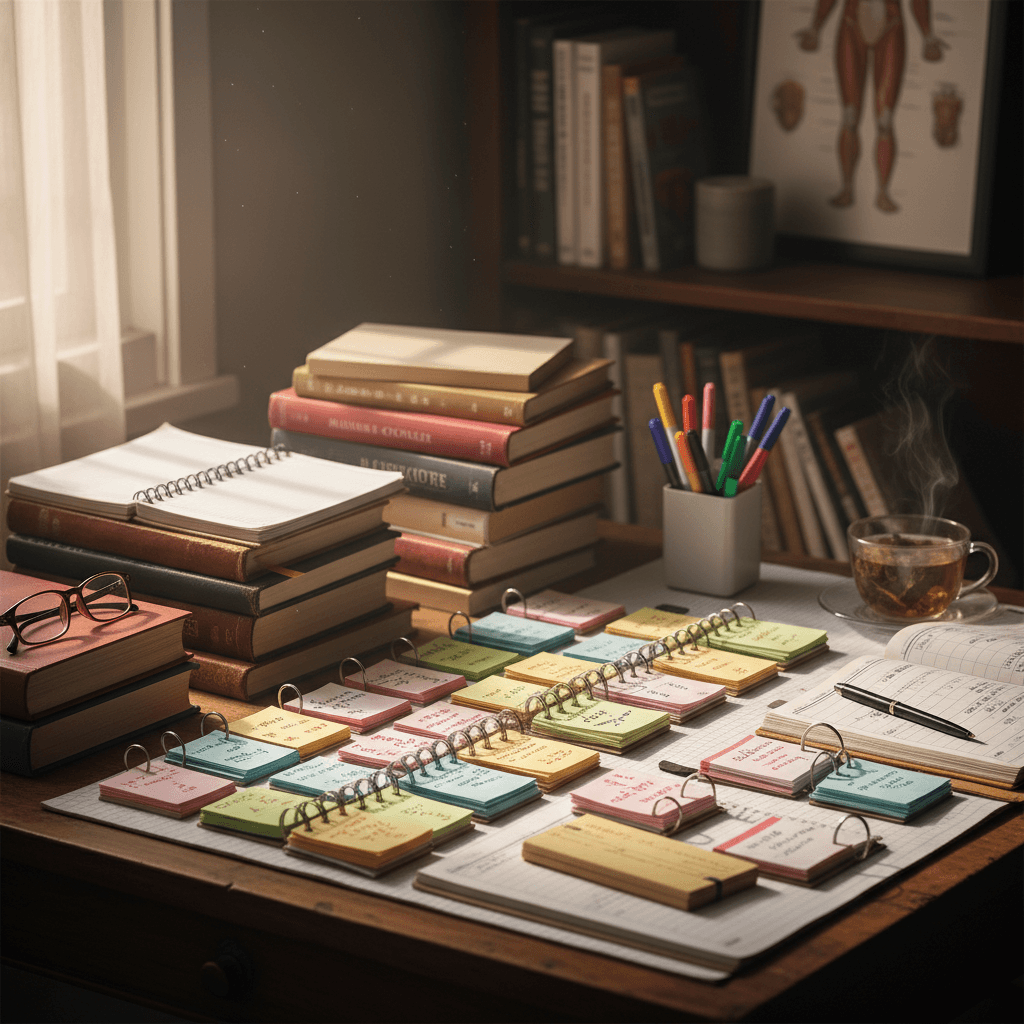
The Night Before the Exam
I’ll never forget the night before my first college midterm. There I was, surrounded by a fortress of textbooks, highlighters in every color, and a growing sense of dread. I’d read the chapters, I’d taken notes, I’d even re-copied those notes neatly. But when I tried to explain the concepts out loud, my mind went blank. It felt like I’d spent hours staring at words without any of them actually sticking.
Sound familiar?
That experience taught me something crucial: passive review doesn’t cut it when it comes to real learning. It wasn’t until a friend introduced me to the humble flashcard that everything changed. Not just any flashcards, though—effective ones. The kind that don’t just help you memorize, but help you understand, retain, and apply knowledge. Whether you're a student cramming for finals or an educator looking for better ways to support your class, mastering the art of flashcard creation can be a game-changer.
What Makes a Flashcard Truly Effective?
Let’s be honest—we’ve all made flashcards that were little more than fancy paperweights. I used to write entire paragraphs on one side of a card, thinking more information meant better learning. Spoiler: it didn’t. The real magic of flashcards lies in their simplicity and intentionality.
Effective flashcards are built around two key principles: active recall and spaced repetition. Active recall is the process of actively stimulating your memory during the learning process. Instead of passively rereading your notes, you’re forcing your brain to retrieve information. It’s like exercise for your mind—the struggle is where the growth happens.
Spaced repetition, on the other hand, is all about timing. It’s the idea that reviewing information at gradually increasing intervals helps move knowledge from your short-term to your long-term memory. Think of it like watering a plant—too much at once, and you drown it; too little, and it withers. Timing matters.
So how do you build these principles into your flashcards? It starts with how you write them.
Crafting Cards That Work For You
The best flashcards are often the simplest. Here’s what I’ve learned through trial and error (and a few too many late-night study sessions):
First, keep it concise. One question, one answer. One concept per card. If you’re studying the causes of World War I, don’t cram all five causes onto one card. Break it down. “What was the immediate trigger of WWI?” with “The assassination of Archduke Franz Ferdinand” on the back. This makes your review sessions focused and efficient.
Second, make them personal. Use your own words, not just textbook definitions. If you’re a visual learner, doodle a quick diagram. If you’re studying a language, add an example sentence that’s meaningful to you. I once had a friend who used inside jokes to remember chemistry formulas. It worked because it resonated with him.
Third, don’t shy away from complexity—break it down. Flashcards aren’t just for vocabulary or dates. You can use them for processes, theories, or even problem-solving steps. For instance, when studying math, I’d use a card to recall the steps of solving a quadratic equation. On the front: “Steps to solve ax² + bx + c = 0.” On the back, a quick numbered list. It turned a daunting process into manageable chunks.
And here’s a pro tip: mix it up. Shuffle your deck regularly to avoid learning the order of the cards instead of the content. It keeps your brain engaged and makes sure you’re actually learning the material.
Bringing Flashcards into the Digital Age
I’ll admit, I was skeptical about digital flashcards at first. There was something satisfying about physically writing and flipping cards. But then I discovered tools like QuizSmart, and it changed the game. Digital platforms excel at facilitating spaced repetition without you having to manually track when to review which cards. They also make it easy to incorporate multimedia—images, audio, even video—which can be especially helpful for subjects like anatomy or language learning.
What I love about tools like QuizSmart is how they take the guesswork out of test preparation. The algorithm knows when you’re likely to forget something and schedules reviews right before that happens. It’s like having a personal study coach.
But whether you’re using an app or index cards, the principles remain the same. The goal is self-testing—engaging in deliberate practice that strengthens your memory and understanding.
Real Stories: From Panic to Confidence
I once tutored a high school student named Maya who struggled with biology. She could read a chapter three times and still not remember the steps of mitosis. We decided to try flashcards. Instead of writing “What is prophase?” we framed it as, “What happens first in cell division?” She drew simple sketches on each card—a circle with squiggles for chromosomes. Within two weeks, she wasn’t just memorizing; she was explaining the process to me with confidence. Her quiz techniques improved because she was actively engaging with the material, not just passively reviewing it.
Another example: Mr. Evans, a history teacher I know, started using flashcards in his classroom—but with a twist. He had students create cards for key historical figures and events, then used them in a weekly “flashcard debate” where students had to use the information to support an argument. It transformed rote memorization into critical thinking.
Your Turn to Give It a Try
Flashcards are more than just a study tool—they’re a way to train your brain to learn more effectively. They encourage you to engage, to question, to retrieve, and to reinforce. And in a world overflowing with information, that’s a skill worth mastering.
So the next time you’re facing down a mountain of material, don’t just reread. Don’t just highlight. Create. Test yourself. Space it out. Whether you’re using a trusted app like QuizSmart or a stack of index cards, remember that the power isn’t in the tool itself—it’s in how you use it.
Your brain is capable of incredible things. Sometimes, it just needs the right kind of nudge.
Now go make some flashcards. And this time, make them work for you.