Medical school success with AI-powered study tools
Remember that moment in medical school when you realize you’ve bitten off more than you can chew? I certainly do. It was 2 AM, and I was staring at a mountain of textbooks and flas...
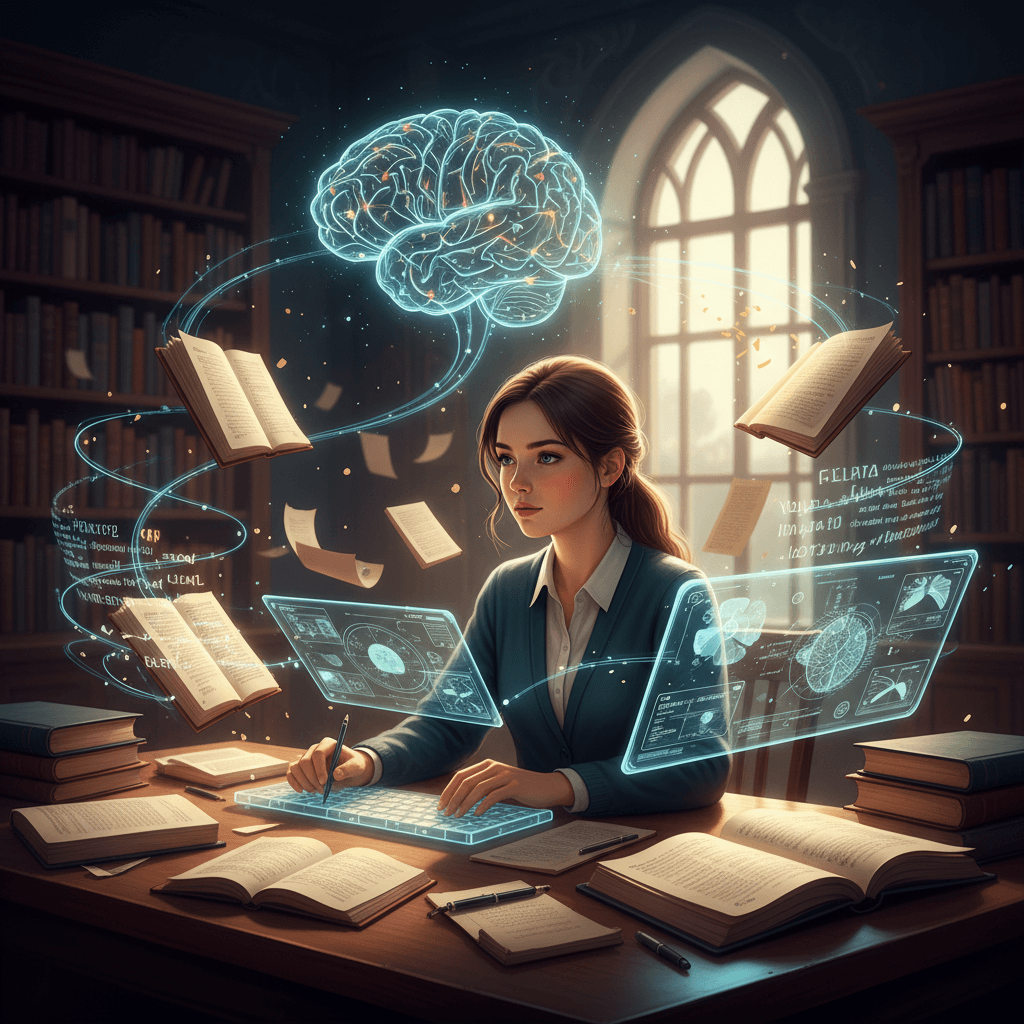
Remember that moment in medical school when you realize you’ve bitten off more than you can chew? I certainly do. It was 2 AM, and I was staring at a mountain of textbooks and flashcards, wondering how I’d ever absorb the entire Krebs cycle, antibiotic mechanisms, and neuroanatomy pathways before my exam. The sheer volume felt impossible. Sound familiar?
What if I told you there’s a different way to approach this challenge—one that doesn’t involve drowning in highlighters and all-nighters? Recently, I had coffee with Sarah, a second-year med student who used to struggle with the same overwhelming feeling. But this time, she seemed different—calmer, more confident. When I asked her secret, she smiled and said, “I finally have a study partner who never gets tired.” That partner wasn’t a person—it was AI.
What If Your Study Tools Actually Understood How You Learn?
We’ve all been there: flipping through endless flashcards, rereading the same paragraph five times, or trying to memorize drug interactions that seem to blur together. Traditional study methods often treat every student and every topic the same way. But here’s the thing—they’re not. Each of us has unique knowledge gaps, learning preferences, and retention patterns.
This is where AI-powered tools are creating a learning transformation that feels almost magical. Instead of one-size-fits-all studying, imagine a system that adapts to your personal learning journey. It knows when you’re struggling with cardiology pharmacology but acing renal physiology. It understands that you learn better with visual aids for anatomy but need repeated practice questions for biochemistry.
Sarah described it perfectly: “It’s like having a tutor who’s with you 24/7, but this tutor has analyzed thousands of medical students’ learning patterns and knows exactly what you need to focus on right now.” She started using QuizSmart, which creates personalized study sessions based on her performance history. “The first time it served me a quiz heavy on the topics I’d been avoiding,” she laughed, “I realized it knew me better than I knew myself.”
From Overwhelmed to In Control: The Science Behind Smarter Studying
What makes these tools so effective isn’t just the fancy technology—it’s how they align with how our brains actually work. Spaced repetition, interleaving different subjects, and active recall aren’t new concepts in educational psychology, but AI makes them effortlessly practical.
Take Michael, a pathology professor I spoke with last month. He was initially skeptical about AI in medical education. “I worried it would become a crutch,” he admitted. But then he noticed something interesting in his students who were using these tools. “Their questions in class became more sophisticated. Instead of asking ‘What’s the answer?’ they were asking ‘Why is this the pattern?’ and ‘How does this connect to what we learned last week?’”
The secret lies in what educators call metacognition—the awareness of one’s own learning process. AI tools provide immediate feedback that helps students develop this awareness naturally. When a system like QuizSmart shows you exactly which concepts you’re mastering and which need more work, it transforms studying from a guessing game into a strategic process.
The most powerful moment in any student’s journey is when they shift from “I hope I pass” to “I know exactly what I need to do to succeed.”
Real-World Application: When Theory Meets the Hospital Floor
Let me share a story that brought this home for me. David, a third-year student on his internal medicine rotation, was preparing for a case presentation about a patient with complex comorbidities. Instead of frantically searching through multiple resources, he used an AI study companion to create a focused review session on the specific conditions he’d be discussing.
“The system generated practice questions that mirrored exactly the kinds of things my attending might ask,” he told me. “But more importantly, it helped me see the connections between the patient’s diabetes management, renal function, and cardiovascular risk factors in a way I hadn’t grasped before.”
The result? Not only did he nail the presentation, but he found himself thinking more holistically about patient care. His attending noticed, commenting on his “unusually well-integrated understanding” of the case.
This is where we see the true potential of AI in medical education—it’s not just about better test scores, but about creating more competent, confident future physicians. The academic achievement becomes a byproduct of deeper understanding.
The Human Element: Keeping Motivation Alive Through the Marathon
Medical school is a marathon, not a sprint, and study motivation can wane during those long, dark nights of preparation. This is another area where AI tools shine unexpectedly—they provide what I call “gentle accountability.”
Rather than facing the daunting task of “study everything,” students get manageable, personalized sessions that build momentum. Every small victory—mastering a difficult concept, improving a quiz score—gets recognized and builds confidence. It’s the difference between staring up at an impossible mountain and following a well-marked trail that shows your progress at every turn.
One educator put it beautifully: “These tools don’t replace the hard work of learning medicine—they make that work more efficient and rewarding. Students spend less time figuring out what to study and more time actually learning.”
Your Journey Forward
As we wrap up, I want you to think about your own study journey. What if you could reclaim those hours spent on ineffective studying? What if you could approach each exam with the confidence that comes from knowing you’ve addressed your specific weak spots?
The landscape of medical education is changing, and it’s not about replacing the dedication and intelligence that brought you here. It’s about enhancing it with tools that understand both the science of medicine and the science of learning.
Whether you’re a student just starting this journey or an educator guiding the next generation of healers, the opportunity is here to transform the learning experience. The goal isn’t just to get through medical school—it’s to emerge as the most capable, knowledgeable physician you can be.
Your future patients will thank you for embracing every tool that makes that possible. And who knows—your 2 AM study sessions might just become a little less lonely, and a lot more effective.