Self-testing techniques for exam preparation
Remember that sinking feeling in your stomach when you stare at an exam question you know you studied for, but the answer just won’t come to you? I certainly do. It was my second y...
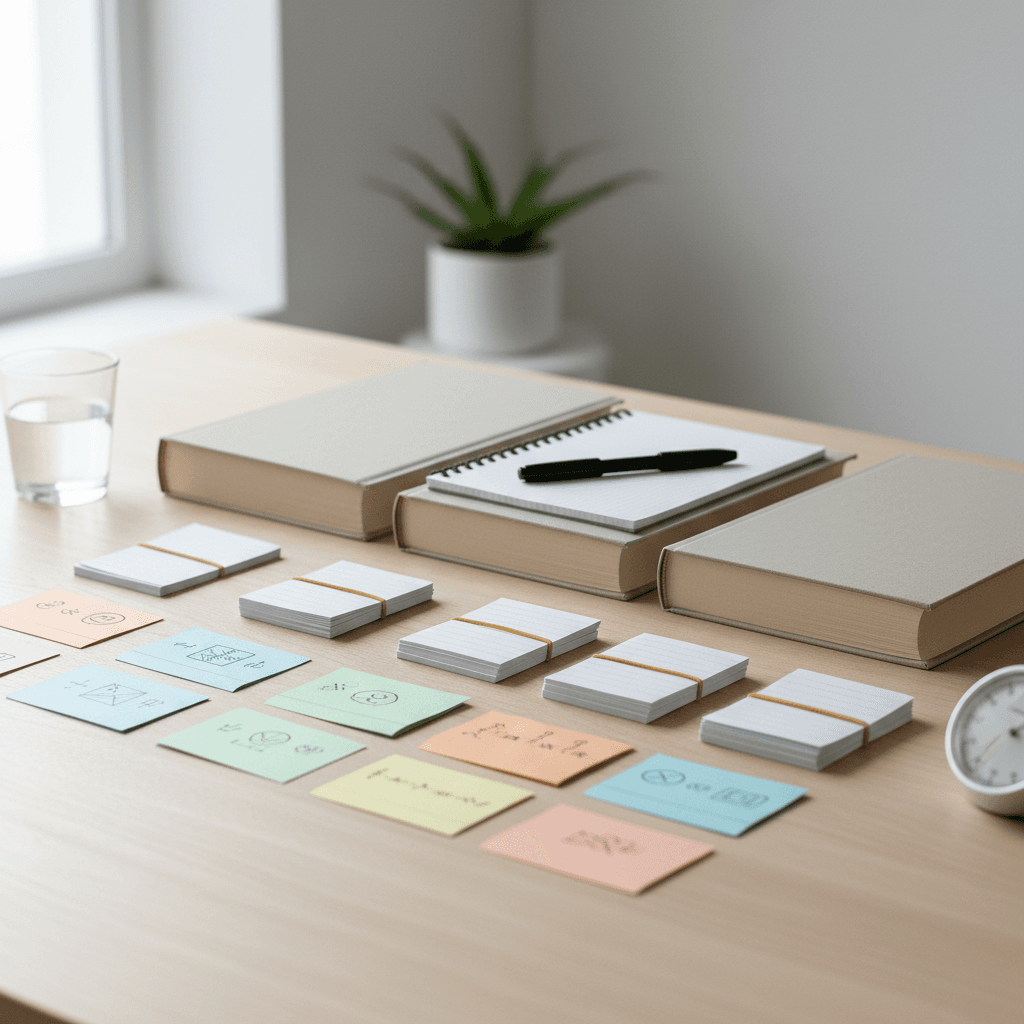
Remember that sinking feeling in your stomach when you stare at an exam question you know you studied for, but the answer just won’t come to you? I certainly do. It was my second year of college, facing down a biology midterm. I’d spent hours re-reading my notes and highlighting textbooks until my fingers were stained yellow. I felt prepared. But the moment I turned over the exam paper, my mind went blank on the very processes I’d reviewed just hours before. I had confused recognizing information with actually knowing it.
This experience, frustrating as it was, became a turning point for me. It led me down a rabbit hole of learning science and a powerful, yet often overlooked, secret weapon of top students and educators: self-testing. It’s not just about taking a practice test the night before. It’s a fundamental shift from passively consuming information to actively engaging with it. It’s the difference between looking at a map of a city and actually walking its streets. Today, I want to walk you through why this approach is so transformative and how you can weave it into your own study habits or teaching practices.
Why Rereading is a Seductive Trap
We’ve all been there. Cracking open a textbook, favorite highlighter in hand, and diligently marking what seems important. It feels productive. The colors brighten the page, and the act of moving your hand creates a sense of accomplishment. But here’s the uncomfortable truth: highlighting and passive rereading are often illusions of competence. They make information familiar, not retrievable.
The cognitive effort required to actually dig a fact out of your memory—a process called active recall—is what builds strong, lasting neural pathways. When you simply reread, you’re just following a well-worn path laid down by the author. When you force yourself to recall it without looking, you’re building your own road from scratch. It’s harder, it feels slower, and you’ll stumble. But that stumbling? That’s where real learning happens.
My friend Sarah, a history teacher, illustrates this perfectly. She told me about a student who could beautifully discuss the causes of World War I right after reading the chapter. But put him in a test preparation scenario a week later, and the details had vanished. The student had done the reading, but he hadn’t done the work of retrieving the information on his own. He hadn't practiced the very skill the exam was demanding.
The Dynamic Duo: Active Recall and Spaced Repetition
So, if passive review is out, what’s in? The answer lies in combining two powerful techniques. Think of active recall as the muscle-building exercise for your brain. Every time you successfully retrieve a piece of information, that memory gets stronger and easier to access next time.
But when should you do this recall? This is where its partner, spaced repetition, comes in. Cramming all your recall practice into one night is like trying to build a muscle with one marathon workout—you’ll be sore, but you won’t see lasting gains. Spaced repetition is about strategically reviewing information at increasing intervals, right before you’re about to forget it.
Imagine learning a new vocabulary word. You might test yourself on it an hour later, then a day later, then three days later, and so on. Each successful recall pushes the next review further out. This systematic approach is what moves knowledge from your short-term to your long-term memory. Tools like QuizSmart are built on this very principle, helping students automate the scheduling of these practice sessions so they can focus on the act of recalling itself.
Weaving Self-Testing Into the Fabric of Your Learning
Okay, this all sounds great in theory, but what does it actually look like in practice? The beauty of effective self-testing is that it doesn't require fancy equipment. It’s about a change in mindset. After reading a chapter or attending a lecture, close the book or your notes. Then, take a blank piece of paper and write down everything you can remember. Don’t worry about order or neatness. The struggle to retrieve the information is the entire point.
Another powerful method is to use the Feynman Technique: try to explain the concept you just learned in the simplest terms possible, as if you were teaching it to a complete novice. The moment you hit a snag or have to resort to jargon, you’ve identified a gap in your understanding. These are simple yet profoundly effective quiz techniques that cost nothing but a little time and cognitive effort.
The most effective learning feels difficult in the moment. It’s the struggle that makes it stick.
For educators, this is a call to move beyond just providing information. It’s about designing learning experiences that force retrieval. Instead of a final review session where you re-deliver a lecture, why not run a low-stakes quiz? Or have students spend five minutes writing down the three most important things they learned in the previous class? You’re not just assessing them; you’re giving their brains the practice they need to build lasting knowledge.
Real-World Application: From Panic to Poise
Let me bring this back to a personal story. After my biology midterm disaster, I completely overhauled my approach. For my next big chemistry exam, I started weeks in advance. I created a deck of flashcards for key concepts and formulas. But I didn’t just flip through them. I actively quizzed myself, sorting the cards into piles: “I know this cold,” “I’m a bit shaky,” and “I have no idea.” I focused my energy on the shaky and unknown piles, reviewing them daily.
I also used the blank page method after each chapter. The first time I tried it, it was brutal. I could only recall a fraction of the material. But I didn’t get discouraged. I’d open the book, fill in the gaps, and then try again a couple of days later. Each time, I could recall more. By the time the exam came, I wasn’t cramming. I was doing a final, confident review. Walking into that exam hall, I didn’t feel panic; I felt prepared. The questions weren’t surprises—they were prompts I had already practiced answering in my own mind dozens of times. The result was one of the highest grades I’d ever earned, with a fraction of the last-minute stress.
The journey to effective learning isn’t about finding more hours in the day; it’s about making the hours you have more impactful. By embracing self-testing through active recall and spaced repetition, you shift from being a passive consumer of information to an active architect of your own knowledge. It’s a more challenging path, there’s no doubt about it. But it’s the one that leads to true mastery and the confidence that comes with it. So, the next time you sit down to study, ask yourself: am I just reviewing, or am I truly retrieving? Your brain will thank you for the workout.