Self-testing techniques for exam preparation
Remember that sinking feeling in your stomach when you stare at an exam question you know you studied for, but the answer just won’t come to you? I certainly do.
Remember that sinking feeling in your stomach when you stare at an exam question you know you studied for, but the answer just won’t come to you? I certainly do.
It was my second year of university, and I had a big history midterm. I’d done what I thought was the "right" thing: I’d re-read all the textbook chapters, highlighted my notes in three different colors, and even re-copied them neatly. I felt prepared. But when I sat down in that silent lecture hall, my mind went blank. The dates, the names, the significance of events—it was all a jumbled mess. I had spent hours looking at the information, but I had never truly practiced retrieving it.
That experience was my painful introduction to the most underrated superpower in learning: self-testing. It’s the difference between recognizing a face in a crowd and being able to recall their name on the spot. Today, we're going to explore why moving from passive review to active self-examination isn't just a good idea—it's a game-changer.
Why Rereading Your Notes is Like Looking at a Map Without Taking the Journey
We’ve all been taught that to learn, we must review. But what if one of the most common study habits is also one of the least effective? Think about it: when you re-read your notes or a textbook chapter, the information feels familiar. "Ah, yes, I remember this," you think. This feeling of fluency is deceptive. It tricks your brain into thinking you know the material, when in reality, you’re just comfortable with the look of it.
The real magic happens not when the information is going in, but when you’re forcing it to come out. This process is called active recall. It’s the mental heavy lifting of digging for an answer without any hints. Every time you successfully retrieve a piece of information, you’re strengthening the neural pathway to it, making it easier to find the next time you need it, especially under pressure.
My friend Sarah, a chemistry teacher, puts it perfectly: "I tell my students that studying for a test is like training for a marathon. You wouldn't just watch videos of people running; you have to lace up your shoes and hit the pavement. Self-testing is the academic version of that daily run."
The Dynamic Duo: How to Make Knowledge Stick
So, how do we move beyond passive highlighting? By building a study routine around two powerful principles: active recall and its best friend, spaced repetition.
Spaced repetition is simply the idea that you remember things better when you review them over increasing intervals of time. Cramming might get you through tomorrow's quiz, but that information is headed for the exit door of your brain almost immediately. Spacing out your reviews, and mixing up the topics, forces your brain to work harder to retrieve the information, which ironically makes it stick for the long haul.
Imagine you're learning Spanish vocabulary. Instead of memorizing 50 words in one night, you learn 15 today. Tomorrow, you test yourself on those 15. The words you get right, you’ll review again in two days. The ones you get wrong, you review the next day. This systematic approach is far more efficient than brute-force memorization.
This is where modern tools can seamlessly support your efforts. A platform like QuizSmart, for instance, is built on these exact principles. It helps you create smart quizzes and then uses an algorithm to schedule your review sessions, ensuring you’re tested on concepts right before you’re likely to forget them. It turns the science of learning into a simple, automated practice.
Real-World Application: From the Classroom to the Kitchen Table
Let’s make this tangible. Meet Alex, a high school student I tutored who was struggling with biology. He was overwhelmed by the sheer volume of terms. We ditched his old method of rereading and implemented a simple self-testing system.
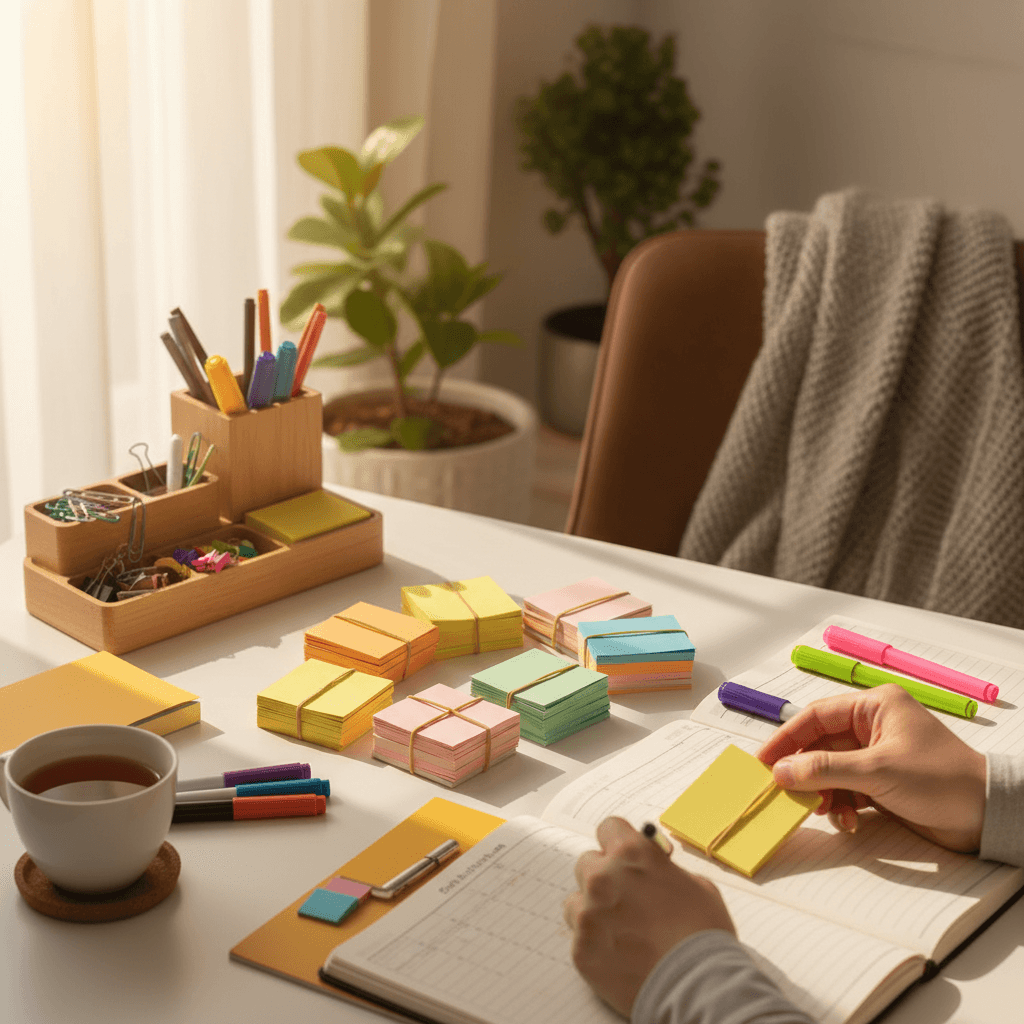
First, he started creating his own flashcards—not just copying definitions, but writing a question on one side and the answer on the other. "What is the function of the mitochondria?" instead of just "Mitochondria: powerhouse of the cell." He’d spend 15 minutes each night quizzing himself. Then, he’d take the stack of cards he got wrong and focus on those the next day. After a week, he was amazed. He wasn't just recognizing the terms; he was explaining them to me without hesitation.
"The struggle to remember is what makes the memory stronger," he told me after acing his next test.
But this isn’t just for students. Educators can harness this power, too. My colleague, David, a law professor, doesn’t just lecture for 90 minutes. He pauses every 20 minutes and poses a single, challenging question to the class. He gives them a minute of silence to think and jot down an answer before discussing it. This simple act of breaking up the lecture with quiz techniques transforms his students from passive listeners into active participants, dramatically improving their retention of complex legal principles.
Your Journey to Confident Recall Starts Now
The shift from passive studying to active test preparation through self-testing is one of the most impactful changes you can make in your learning journey. It turns uncertainty into confidence and cramming into consistent, manageable practice.
It’s not about working harder; it’s about working smarter. It’s about closing the textbook, putting away the highlighted notes, and asking yourself, "What did I just learn?" It’s about embracing the initial struggle of not knowing, because that struggle is where real, durable learning is born.
So, what’s one concept you need to learn this week? Don’t just review it. Challenge yourself. Grab a blank sheet of paper and try to explain it from memory. Create a few flashcards. Or, use a digital tool to streamline the process. The method matters less than the action: test yourself.
Your future self, calmly walking out of that exam room, will thank you for it.