The ethics of AI in academic assessment
The Unseen Grader: When Algorithms Decide Your Future I’ll never forget the panic in my student’s voice. “It’s not fair,” she said, her essay draft trembling in her hand. She’d use...
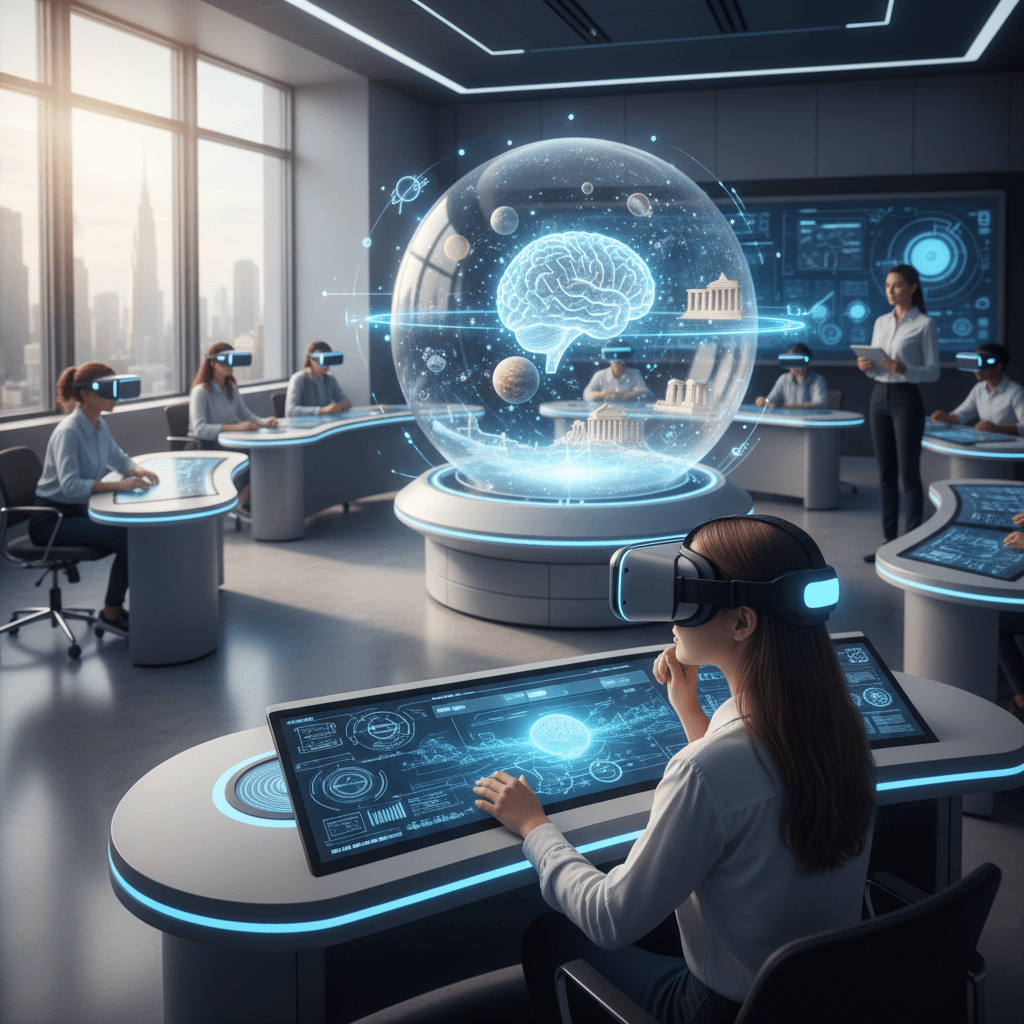
The Unseen Grader: When Algorithms Decide Your Future
I’ll never forget the panic in my student’s voice. “It’s not fair,” she said, her essay draft trembling in her hand. She’d used a grammar-checking tool, and it had flagged her unique, slightly poetic phrasing as “awkward.” The suggested correction was grammatically pristine but stripped all the voice and personality from her writing. It was a simple tool, not even true AI, but it highlighted a question we’re all now facing: What happens when machines start grading not just our grammar, but our ideas?
This is the new frontier of education. Artificial intelligence is moving from the research lab directly into our classrooms and assessment systems. It promises efficiency and personalization, but it also forces us to confront some profound ethical dilemmas. If a machine learning model can grade an essay in seconds, should it? And if it does, what are we really measuring—a student’s understanding, or their ability to game an algorithm?
Welcome to the complex, and deeply human, conversation about the ethics of AI in academic assessment.
The Promise: A World of Personalized, Instant Feedback
Let’s start with the good stuff, because the potential is genuinely exciting. I remember tutoring a student who was struggling with calculus. In a class of thirty, the teacher simply didn’t have the bandwidth to identify the precise moment in the chain of reasoning where his understanding broke down. He was just consistently “wrong.”
Now, imagine a smart tutoring system powered by advanced AI learning. It doesn’t just mark the answer incorrect. It analyzes his每一步, identifies that he consistently makes a specific error when applying the chain rule, and instantly generates three practice problems tailored to that exact weakness. This is the heart of artificial intelligence education—not replacing teachers, but empowering them with tools to offer hyper-personalized support.
This technology can free up educators from the drudgery of grading multiple-choice quizzes or basic problem sets, allowing them to focus on what humans do best: mentoring, inspiring, and guiding complex discussions. Tools like QuizSmart leverage this principle well, using machine learning to help students practice and self-assess, turning study time into an efficient, targeted session. The promise is a more responsive, adaptive, and ultimately more humane educational experience.
The Peril: When the Algorithm Gets It Wrong
But for every promise, there’s a peril. The core of the ethical problem lies in the "black box" nature of many complex AI systems. We often don't know exactly how they arrive at a decision.
Consider the story of a professor who decided to test a new essay-grading AI. He fed it a brilliantly argued, but highly unconventional, essay from a former student. The AI gave it a low score. Why? Because the essay’s structure and vocabulary didn’t match the "model" essays it was trained on. The algorithm had been optimized to reward conformity, not creativity. It was measuring stylistic patterns, not critical thought.
This leads us to the biggest ethical risks:
- Bias Amplification: An AI is only as unbiased as the data it's trained on. If historical grading data reflects human biases, the AI will learn and amplify them. It might unfairly penalize regional dialects, cultural references, or non-Western rhetorical structures.
- The Creativity Penalty: Standardized, formulaic writing is easy for an algorithm to recognize and reward. Unique voices, unconventional structures, and poetic risk-taking are often the first casualties.
- The Illusion of Objectivity: When a computer spits out a score, we’re tempted to see it as purely objective. This "automation bias" can be dangerous, causing us to trust a flawed algorithmic judgment over our own human insight.
The greatest danger is not that machines will begin to think like humans, but that humans will start to think like machines—valuing only what is easily measurable.
Finding the Balance: A Human-in-the-Loop Model
So, where does this leave us? Do we ban AI from assessment altogether? That would be like refusing to use calculators for fear we’ll forget arithmetic. The solution isn't rejection, but thoughtful integration.
The most ethical approach is what experts call the "human-in-the-loop" model. AI should be a tool for educators, not a replacement. It’s the assistant that handles the time-consuming, repetitive tasks and provides rich data—flagging potential plagiarism, checking for factual inconsistencies, or highlighting areas where a student’s writing deviates from the rubric.
But the final judgment, especially on high-stakes, nuanced work like essays and projects, must remain with a human teacher. The teacher brings context. They know that a student wrote a disjointed essay because they were dealing with a family crisis. They can appreciate a clever, off-topic analogy that an AI would miss. They can see the person behind the pixels.
Real-World Application: A Tale of Two Classrooms
Let’s picture two different classrooms grappling with this new reality.
In Classroom A, a teacher fully outsources the first round of essay grading to an AI system. The students receive their scores and a list of generic, computer-generated comments. They feel confused and frustrated, unsure how to improve. The teacher, trusting the algorithm, doesn’t review the grades. Learning has been streamlined into a data point, and the students feel alienated.
In Classroom B, the teacher uses an AI tool to analyze draft submissions. The tool provides the teacher with a dashboard highlighting patterns: "Five students are struggling with thesis statements," "Two essays have potential citation issues," "One student's vocabulary is significantly more advanced than the rest." Armed with this insight, the teacher holds a mini-lesson on thesis statements and has targeted one-on-one conferences. Here, the educational technology is a force multiplier for the teacher’s expertise. The human judgment is informed, not replaced.
This is the sweet spot. It’s the difference between using AI to judge students and using it to understand them.
The Path Forward: Our Shared Responsibility
The ethics of AI in academic assessment isn't a problem for tech companies to solve alone. It’s a conversation we all need to be part of—educators, students, and developers.
For teachers, it means becoming critical consumers of this technology. Ask tough questions: What data was this model trained on? How transparent is its scoring methodology? Never surrender your professional judgment to an algorithm.
For students, it means developing AI literacy. Understand that these tools are assistants, not oracles. Use platforms like QuizSmart for what they're best at—practice and reinforcement—but know that your unique voice and critical thinking are your most valuable assets, things no machine can truly replicate.
The goal of education isn’t to create perfect test-takers, but to nurture curious, adaptable, and ethical human beings. As we navigate this new world of machine learning and smart tutoring, our north star must remain the same: to assess not just what a student knows, but who they are becoming.
Let’s not build systems that simply measure easily quantifiable data. Let’s build tools, together, that help every student’s potential truly blossom. The future of our classrooms depends on it.