The future of AI tutoring systems
Remember that moment in class when you just couldn’t grasp a concept, no matter how many times the teacher explained it? The student next to you got it instantly, but for you, it j...
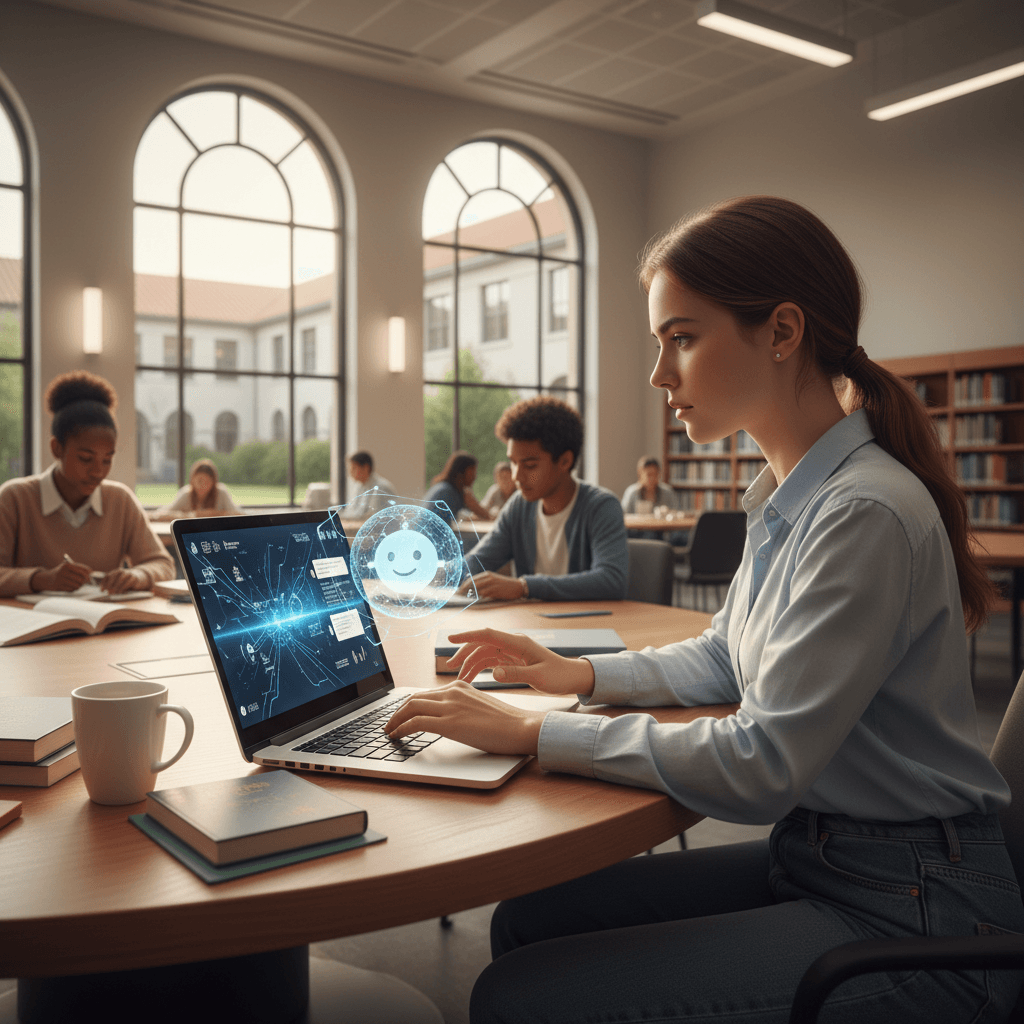
Remember that moment in class when you just couldn’t grasp a concept, no matter how many times the teacher explained it? The student next to you got it instantly, but for you, it just wasn’t clicking. You needed a different approach, a different explanation, maybe even a different pace—but with thirty other students in the room, your teacher only had so much time to give.
I’ll never forget watching my niece struggle with fractions last year. Night after night, she’d sit at the kitchen table growing increasingly frustrated while her well-meaning parents tried to help using the same methods that worked for them decades ago. Then her teacher introduced an AI learning tool that adapted to her unique confusion points. Within two weeks, she wasn’t just keeping up—she was helping other students. That transformation made me realize we’re standing at the edge of something revolutionary in education.
What If Your Tutor Knew Exactly How You Learn?
Traditional education has always operated on a factory model—one size fits all, despite overwhelming evidence that we all learn differently. The most exciting promise of artificial intelligence education isn’t about replacing teachers; it’s about finally delivering on the century-old dream of personalized learning at scale.
I recently spoke with a math teacher who’d been using an early AI tutoring system in her classroom. She described how the system noticed something she’d missed for months: one of her quietest students consistently struggled with word problems only when they contained certain vocabulary. The AI adjusted the wording while maintaining the mathematical complexity, and suddenly the student’s performance transformed. This is the power of machine learning in education—it detects patterns human teachers might miss because they’re managing twenty other things simultaneously.
These systems work by building what educators call a “knowledge graph” for each student. Rather than just tracking right and wrong answers, they understand the relationships between concepts. If you’re struggling with algebraic equations, a smart tutoring system might discover it’s actually because you never fully grasped order of operations—and it will take you back to fill that specific gap before moving forward.
Beyond the Hype: What Actually Changes in the Classroom?
The biggest misconception about educational technology is that it’s about replacing human connection. In reality, the most effective AI systems free up teachers to do what only humans can do.
Take Mr. Henderson, a history teacher I met at an education conference. He used to spend hours grading basic comprehension quizzes—time he’d rather spend designing engaging projects and having meaningful one-on-one conversations. Now, an AI handles the routine assessments while providing him with detailed analytics about where each student needs help. “It’s like having a teaching assistant who knows exactly what each child needs,” he told me. “I get to focus on the parts of teaching that drew me to this profession.”
What’s particularly fascinating is how these systems adapt in real-time. Tools like QuizSmart demonstrate this beautifully—they don’t just test knowledge, they learn how each student learns. If you consistently miss questions about a specific concept, the system might present the same material through a video, an interactive simulation, or a completely different explanation until it finds what resonates with you.
The classroom of the near future might look something like this: students working at their own pace with AI tutors while the teacher circulates, spending quality time with individuals or small groups. The AI handles the repetitive practice and assessment, while the teacher handles inspiration, mentorship, and addressing the nuanced questions that machines can’t comprehend.
The Human Element: Where Teachers Shine Brighter Than Ever
There’s a legitimate concern that AI might dehumanize education, but what I’ve observed suggests the opposite. When routine tasks are automated, the uniquely human aspects of teaching become more valuable than ever.
My friend Sarah, a special education teacher, shared how AI has transformed her work with neurodiverse students. “The AI can provide endless patience and consistency for foundational skills,” she explained. “That means I can focus on building their confidence, teaching social skills, and discovering what makes each child light up with excitement.”
The most effective implementations I’ve seen position AI as the tireless practice partner while teachers become the coaches, mentors, and learning designers. The AI might identify that a student needs help with comma rules, but the teacher knows that student just went through a difficult family situation and needs encouragement more than grammar correction.
The best education has always been about relationships, and technology at its best doesn’t replace relationships—it deepens them by handling what machines do well so humans can focus on what humans do best.
Real-World Application: Stories From the Front Lines
At Lincoln High School, they’ve been piloting an AI tutoring system for their summer bridge program. Students who previously struggled with math are working with an AI that adapts to their learning pace while their teacher, Ms. Rodriguez, focuses on small group interventions. “The AI noticed several students making the same unusual error in graphing linear equations,” she told me. “It created specific exercises to address that misconception, and I was able to design a hands-on activity to make the concept stick.”
Meanwhile, in college classrooms, professors are using AI systems to provide immediate feedback on writing assignments. One English professor described how the AI catches basic grammatical patterns while she focuses on argument structure and rhetorical strategies. “It’s like having a first reader who never gets tired,” she said.
What’s particularly compelling is watching students become more confident learners. The instant feedback and endless patience of AI systems create psychological safety to make mistakes and learn from them—something many students avoid in traditional classroom settings for fear of embarrassment.
The Road Ahead
We’re still in the early chapters of this story. The AI tutoring systems of tomorrow will likely understand not just what we know, but how we feel while learning. They might detect frustration through typing patterns or recognize engagement levels through interaction data—all while maintaining privacy and ethical boundaries.
The goal isn’t to create perfect students who never struggle, but to create supported learners who develop resilience and curiosity. The most powerful learning often happens in that productive struggle—the space between what we know and what we’re trying to understand. AI tutors can make that space safer and more productive.
What excites me most is the possibility of democratizing great education. The same quality of personalized tutoring that was once available only to the wealthy might soon be accessible to every student with an internet connection.
So the next time you see a student struggling with a concept, or find yourself hitting a wall in your own learning, remember that we’re building a future where everyone gets the support they need exactly when they need it. The question isn’t whether AI will transform education—it’s how we’ll shape that transformation to create more meaningful learning experiences for everyone.
What learning challenge would you want an AI tutor to help you with tomorrow?