The psychology behind effective quiz design
Remember that sinking feeling? You’re staring at a quiz, the questions look familiar—you know you read this chapter—but the right answers feel just out of reach. It’s like trying t...
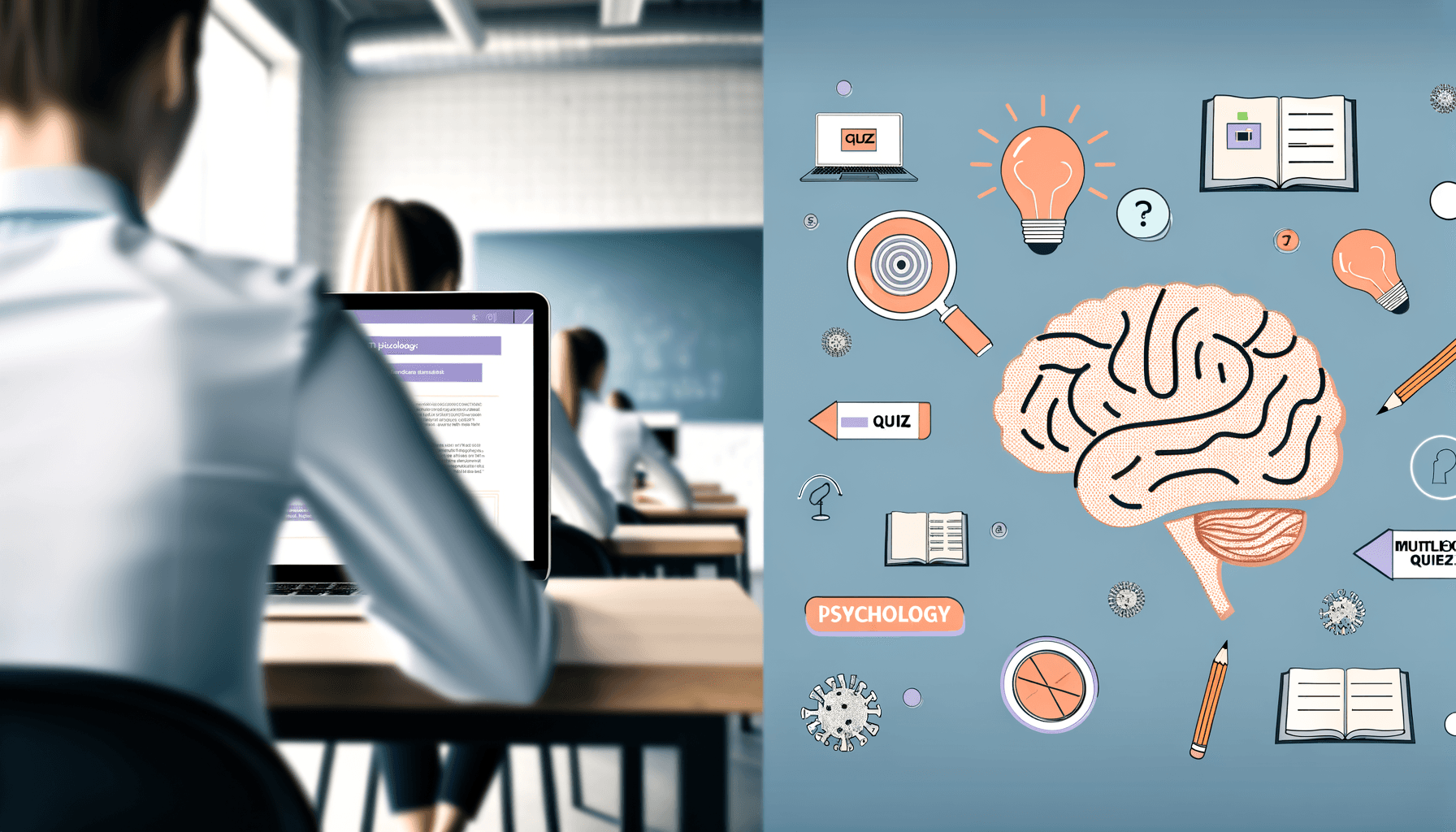
Remember that sinking feeling? You’re staring at a quiz, the questions look familiar—you know you read this chapter—but the right answers feel just out of reach. It’s like trying to grab smoke. You crammed, you highlighted, you reread your notes… so why does it still feel like your brain has decided to take a coffee break right when you need it most?
If you’ve ever been there—and let’s be honest, who hasn’t?—you’re not alone. For years, I thought successful test preparation was just about putting in the hours. Then, during grad school, I hit a wall. No matter how late I stayed up, my retention was abysmal. It wasn’t until a professor pulled me aside and said, “You’re studying hard, but are you studying smart?” that everything changed. She introduced me to the idea that how we quiz ourselves—not just how much—makes all the difference. That conversation didn’t just change my grades; it changed how I saw learning altogether.
Why Do We Forget What We Just Studied?
It turns out, our brains aren’t designed to absorb information through passive review. Think about it like this: reading your notes for the third time is like rewatching a movie trailer and expecting to know the whole plot. You might recognize a scene or two, but you’re missing depth, context, and connection.
Enter one of the most powerful concepts in learning science: active recall. This isn’t just a fancy term—it’s the mental equivalent of lifting weights instead of watching someone else do it. When you actively try to retrieve information from your memory, you’re strengthening the neural pathways that make that knowledge stick. It’s the difference between recognizing an answer on a multiple-choice quiz and actually generating it yourself.
I saw this play out with my friend Liam, a high school history teacher. Frustrated that his students could discuss topics in class but blanked on tests, he shifted his approach. Instead of assigning review sheets, he started beginning each class with a low-stakes, no-grade quiz. Just five questions—no pressure. At first, students groaned. But within weeks, something shifted. They weren’t just memorizing facts; they were engaging with the material. Their test scores improved, but more importantly, so did their confidence.
The Magic of Timing: Cramming vs. Consistency
We’ve all been there—the midnight oil, the stack of flashcards, the desperate hope that enough coffee will cement the periodic table into our brains forever. But deep down, we know cramming doesn’t work. Why? Because our brains need time to process and store information properly.
This is where spaced repetition comes in. It’s a simple but profoundly effective idea: instead of studying something once for a long time, you review it multiple times across increasing intervals. Your brain forgets things on a curve, and by revisiting material right when you’re about to forget it, you signal to your mind that this information is worth holding onto.
I used to tutor a college student named Maya who struggled with biology. She’d study for hours the night before an exam, only to forget half of it by the next morning. We decided to experiment. She started using a tool called QuizSmart, which leverages spaced repetition algorithms to schedule review sessions based on her performance. Instead of marathon study sessions, she spent ten minutes each day reviewing previously covered material. The result? Her quiz scores went from C’s to consistent A’s. She wasn’t studying more; she was studying wiser.
Designing Quizzes That Actually Work
So what does an effective quiz look like? It’s not just a list of questions—it’s a learning experience. Good quiz techniques do more than assess; they teach.
For example, mixing up topics within a single quiz—a technique called interleaving—forces the brain to work harder. Instead of answering ten questions on the same concept, you’re switching gears, which improves your ability to apply knowledge flexibly. It’s like cross-training for your mind.
Another key element is feedback. Immediate, clear feedback turns a quiz from a judgment into a tool. When you know why you got something wrong right away, you correct the misunderstanding before it takes root. Tools like QuizSmart are built around this idea, offering explanations and guiding learners toward mastery rather than just scoring them.
My colleague, Dr. Evans, a chemistry professor, redesigned his lab quizzes to include two-stage questions: first, students answer individually, then they discuss in small groups before answering again. This not only reinforces learning through discussion but also builds collaborative skills. His students aren’t just preparing for a test; they’re learning how to learn.
Real-World Application: From the Classroom to the Kitchen Table
Let’s bring this out of the theoretical and into the everyday. Imagine Sarah, a middle school science teacher. She noticed her students dreaded chapter quizzes—they’d stress, underperform, and quickly forget the material afterward. So, she decided to flip the script.
She began incorporating regular, no-stakes self-testing into her lessons. Sometimes it was a digital quiz via QuizSmart; other times, it was old-school flashcards or quick partner quizzes. The atmosphere in her classroom shifted. Quizzes became puzzles to solve rather than obstacles to fear. Her students began seeing them as opportunities to check their understanding, not as judgments of their intelligence.
At home, a parent might use these same principles to help their child with multiplication tables. Instead of drilling for an hour, five minutes of quick-fire questions over breakfast each day—spaced repetition in action—can yield better results with half the stress.
Your Turn to Make Quizzes Work for You
Whether you’re a student tired of forgetting what you study, a teacher looking to inspire more lightbulb moments, or an education professional refining your approach, remember this: effective learning isn’t about how much you study. It’s about how you engage with the material.
Quizzes, when designed with psychology in mind, aren’t just assessments—they’re engines for understanding. They leverage active recall, spaced repetition, and timely feedback to turn fleeting facts into lasting knowledge.
So the next time you sit down to study or design a quiz, ask yourself: Am I helping my brain do its best work? If you’re looking for a place to start, explore tools like QuizSmart that are built on these very principles. But most importantly, remember that learning is a journey—and with the right techniques, it’s one you can truly enjoy.
Here’s to better learning, one thoughtful question at a time.