The psychology behind effective quiz design
Remember that sinking feeling in your stomach when you’d stare at a quiz question and your mind went completely blank? I sure do. It was my freshman year biology midterm—a multiple...
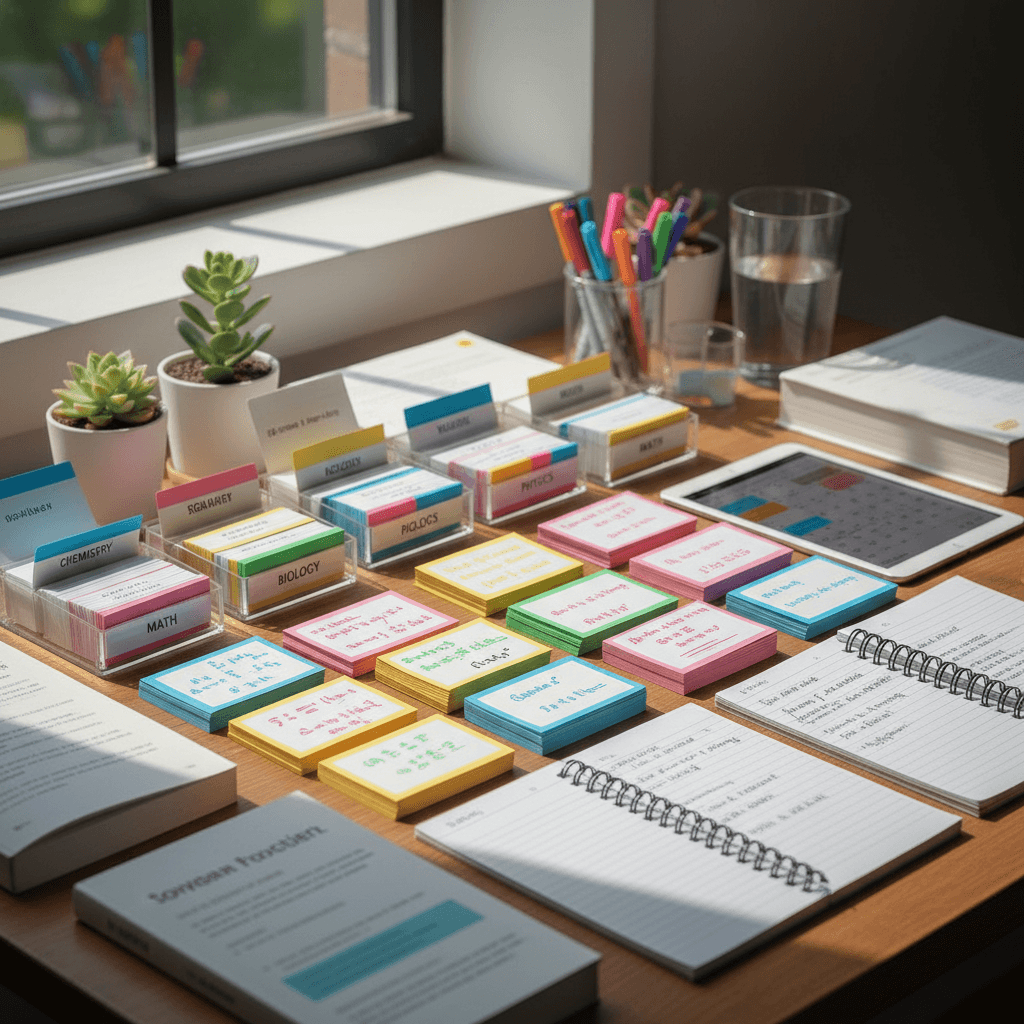
Remember that sinking feeling in your stomach when you’d stare at a quiz question and your mind went completely blank? I sure do. It was my freshman year biology midterm—a multiple-choice monster that seemed designed to trick rather than teach. I’d spent nights memorizing textbooks, yet there I was, frozen. The questions felt like they were in a different language.
What I didn’t realize then was that my struggle wasn’t just about knowing the material—it was about how I was being tested. Years later, while studying educational psychology, I had my “aha” moment: effective quiz design isn’t just about assessment; it’s actually one of the most powerful learning tools we have.
Why Do Some Quizzes Stick While Others Fizzle?
Think about the last time you took a really good quiz. What made it different? For me, it was a history professor who gave us weekly, low-stakes quizzes that felt more like puzzles than tests. She wasn’t trying to catch us out—she was helping us retrieve what we’d learned.
The secret lies in something called active recall. This isn’t just educational jargon—it’s the psychological principle that struggling to remember something actually strengthens your memory of it. When you force your brain to retrieve information, you’re building stronger neural pathways. It’s like mental weightlifting—the effort is what makes you stronger.
My biology professor’s trick questions? They tested recognition, not recall. But my history professor’s quizzes made me actively reconstruct timelines and arguments from memory. The difference was night and day.
The Hidden Power of Strategic Forgetting
Here’s where it gets really interesting. One of the most counterintuitive findings in learning science is that forgetting is actually essential to remembering. Sounds contradictory, right? Let me explain.
When you learn something new and then let yourself almost forget it, the act of retrieving it again creates deeper learning. This is where spaced repetition comes in—the practice of reviewing material at strategically increasing intervals.
I saw this play out dramatically when tutoring my neighbor’s daughter last year. Sarah was struggling with Spanish vocabulary. We tried something simple: instead of cramming 50 words the night before her test, we quizzed her on 15 words daily, then every other day, then weekly. The words she found easier we reviewed less often; the tougher ones came up more frequently.
Within three weeks, her test scores improved dramatically. “It’s like the words just stick now,” she told me. That’s spaced repetition in action—working with our brain’s natural forgetting curve rather than against it.
Making It Real: Quiz Design That Actually Teaches
So how do we translate these principles into quiz techniques that work? The key is shifting from testing what students know to designing experiences that help them learn.
Take my friend Mark, a high school chemistry teacher who transformed his approach to test preparation. Instead of handing out review sheets, he now creates weekly mini-quizzes that mix new material with questions from previous weeks. He’s not just checking if students remember last month’s lesson—he’s making sure they do.
His secret? He designs questions that require application, not just regurgitation. Instead of “Define covalent bond,” he asks “Why does water’ molecular structure make it an excellent solvent?” Students have to retrieve the concept and apply it to a new scenario.
This approach to self-testing creates what researchers call “desirable difficulty”—the sweet spot where the challenge is hard enough to strengthen learning but not so hard that it causes frustration. Tools like QuizSmart have been game-changers here, helping educators create quizzes that automatically incorporate spaced repetition and varied question types.
The Ripple Effect in Real Classrooms
I recently visited a community college where psychology professor Dr. Evans has completely reimagined assessment. Her students don’t have high-stakes exams anymore—instead, they complete daily micro-quizzes at the start of each class.
“The first week, students were skeptical,” she told me. “But by mid-semester, they were seeing the difference. One student said she’d never felt so confident walking into final review sessions.”
What struck me was hearing from Maria, a first-generation college student who’d previously struggled with standardized tests. “The constant low-pressure quizzing took away my test anxiety,” she explained. “I stopped worrying about proving what I knew and started focusing on actually learning.”
This is the power of well-designed quizzes—they become learning experiences rather than judgment moments. When students engage in regular self-testing, they develop metacognitive skills too. They start understanding what they know well versus what needs more work.
Your Turn to Transform Testing
So where do we go from here? Whether you’re a student designing your own study plan or an educator creating classroom assessments, the principles remain the same: focus on active retrieval, embrace strategic spacing, and remember that the best quizzes feel like conversations rather than interrogations.
The most effective quizzes don’t just measure learning—they create it.
Start small. If you’re a student, try creating your own daily five-question self-quiz on the material you’re learning. If you’re an educator, experiment with mixing old and new material in your next assessment. Pay attention to how the struggle to recall actually feels different from the panic of not knowing.
The beautiful truth is that we’re all natural learners—we just need the right tools and approaches. And sometimes, the most powerful tool is as simple as asking the right questions in the right way. What will your first better quiz look like?