Time-blocking methods for better study sessions
Ever found yourself staring at a textbook for two hours, only to realize you’ve absorbed nothing more than the texture of the paper? Or maybe you’ve sat down to plan your study ses...
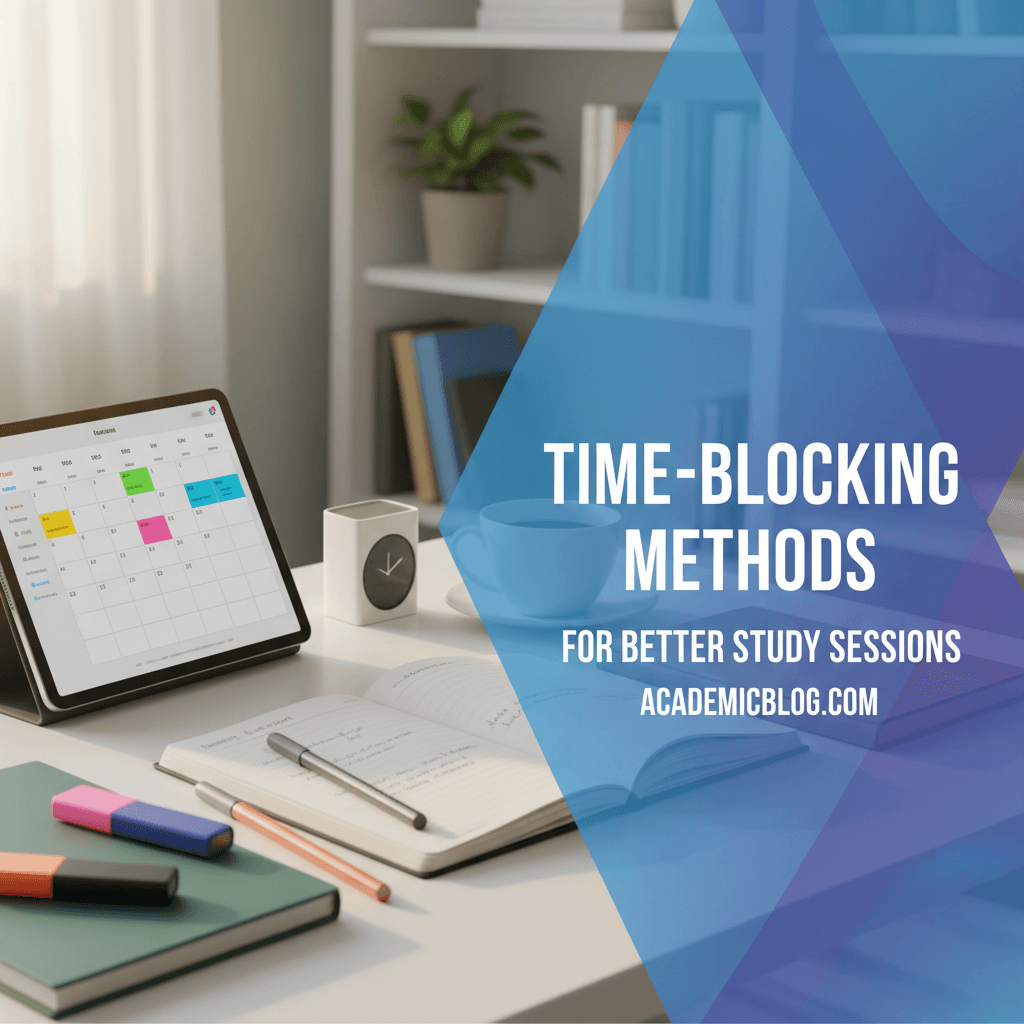
Ever found yourself staring at a textbook for two hours, only to realize you’ve absorbed nothing more than the texture of the paper? Or maybe you’ve sat down to plan your study session, armed with highlighters and good intentions, only to end up scrolling through your phone, wondering where the time went? If so, you’re not alone. I’ve been there too—more times than I’d like to admit.
It wasn’t until my third year of college, drowning in deadlines and caffeine, that I stumbled upon a game-changing idea: what if studying wasn’t about how long you sat at your desk, but how intentionally you used your time? That’s when I discovered time-blocking, a simple yet profoundly effective method that transformed not just my grades, but my entire approach to learning. And trust me, if I—a chronic procrastinator—could make it work, so can you.
What Exactly Is Time-Blocking, and Why Does It Work So Well?
At its core, time-blocking is about assigning specific blocks of time to specific tasks. Instead of vaguely telling yourself, “I’ll study biology today,” you schedule it: “From 10 AM to 11:30 AM, I’m reviewing chapter 5.” It sounds almost too simple, right? But there’s science behind why this method is so powerful.
Our brains thrive on structure. When we create clear boundaries around our tasks, we reduce decision fatigue—the mental exhaustion that comes from constantly asking, “What should I do next?” By dedicating focused time to one thing, we enter a state of deep work, where concentration peaks and distractions fade. This isn’t just about getting things done; it’s about creating the mental space for effective studying and genuine comprehension.
I remember talking to my friend Lena, a high school teacher, who introduced time-blocking to her overwhelmed students. One of them, Jake, had been struggling with history—a subject he found endlessly boring. Lena encouraged him to break his study sessions into 25-minute blocks with 5-minute breaks (a technique you might recognize as the Pomodoro Method). Within weeks, Jake wasn’t just memorizing dates; he was connecting ideas, asking questions, and actually enjoying the process. His grades improved, but more importantly, so did his confidence.
How to Start Time-Blocking—Without Overcomplicating It
The beauty of time-blocking is its flexibility. You don’t need color-coded planners or complex apps to make it work. Start with just a notebook or a digital calendar. The key is to be realistic. Block out time not just for studying, but for breaks, meals, and even leisure. Burnout is the enemy of academic success, and rest is just as important as revision.
Here’s how I like to approach it:
- Begin by identifying your priorities for the week. What exams are coming up? Which topics need the most attention?
- Block time for your most challenging subjects during your peak energy hours. If you’re a morning person, tackle calculus at 9 AM; if you’re a night owl, save it for later.
- Include buffer time between blocks. Life happens—unexpected interruptions, mental fatigue—so give yourself grace.
When I was prepping for my graduate exams, I used time-blocking religiously. Mondays were for research, Tuesdays for writing, Wednesdays for review. And within those days, I broke things down further: 9–10:30 AM for reading journal articles, 11 AM–12 PM for outlining. It felt rigid at first, but soon it became liberating. I knew exactly what to focus on and when, which freed up mental energy for actually learning instead of stressing.
Educators can apply this too. My colleague David, a college professor, uses time-blocking to structure his lesson planning and grading. He sets aside two-hour blocks for creating assignments and shorter bursts for responding to student emails. It’s made him more efficient and present—for his students and himself.

Making It Stick: Tools and Mindset Shifts
Like any new habit, time-blocking takes practice. It’s easy to fall back into old patterns, especially when motivation wanes. That’s where tools like QuizSmart can make a difference. I’ve found it incredibly helpful for creating quick review sessions within my scheduled blocks. Instead of wasting time figuring out what to study, I let the app generate quizzes based on my weak areas, making my sessions more targeted and efficient.
But tools alone aren’t enough. The real shift happens in your mindset. Time-blocking isn’t about filling every minute with productivity; it’s about respecting your time and energy. It’s okay if some days don’t go as planned. The goal is progress, not perfection.
Think about Maria, a student I tutored who struggled with attention span. She started with just one 25-minute block a day, gradually increasing as she built focus. Within a month, she was covering more material in two hours than she previously did in five. Her secret? She paired time-blocking with active recall techniques, turning passive reading into engaging self-quizzing. Her memory improvement was noticeable, and she aced her finals.
Real-World Application: Stories of Transformation
Let’s bring this to life with a few more examples. Take Alex, a med student who used to pull all-nighters before exams. He switched to time-blocking, dedicating 90-minute sessions to different subjects with breaks in between. Not only did his retention improve, but he also had time for hobbies and sleep—something he thought was impossible during exam season.
Then there’s Ms. Rivera, a middle school science teacher. She introduced time-blocking to her students by breaking her class into focused intervals: 15 minutes of direct instruction, 20 minutes of group work, 10 minutes of individual practice. Her students became more engaged, and their test scores rose significantly. She told me, “It’s not just a study technique; it’s a life skill.”
These stories highlight something important: time-blocking isn’t a one-size-fits-all solution. It’s a framework you can adapt to your needs, whether you’re a student preparing for the SATs or an educator designing a curriculum.
Your Time Is Your Greatest Resource—Use It Wisely
At the end of the day, time-blocking is more than a productivity hack. It’s a way to take control of your learning journey, reduce stress, and make room for what truly matters. It’s about working smarter, not harder—and isn’t that what we all want?
So, whether you’re a student drowning in textbooks or a teacher looking to empower your classroom, I encourage you to give time-blocking a try. Start small. Block out just one focused session tomorrow. See how it feels. You might be surprised by how much you can accomplish when you give your brain the structure it craves.
Remember, academic success isn’t about how many hours you log—it’s about how meaningfully you use them. Here’s to more focused, effective, and enjoyable study sessions ahead. You’ve got this.