Using quizzes for active recall learning
Remember that sinking feeling in your stomach when you’re staring at an exam paper and the answer you know you studied is just… gone? You can almost grasp it, but it slips away lik...
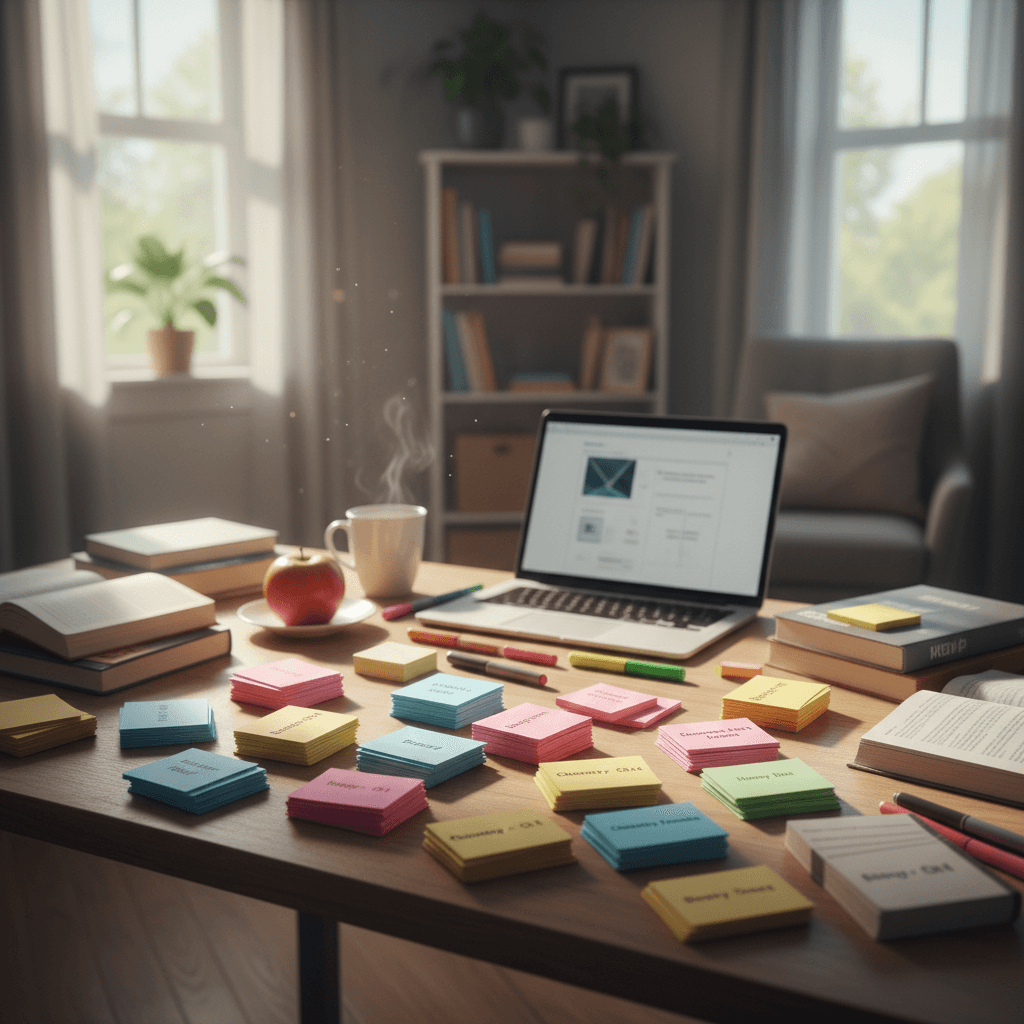
Remember that sinking feeling in your stomach when you’re staring at an exam paper and the answer you know you studied is just… gone? You can almost grasp it, but it slips away like smoke through your fingers. I’ll never forget my college biology final, where I spent hours re-reading my color-coded notes on cellular respiration, only to draw a complete blank on the Krebs cycle. I had seen the information dozens of times, but I had never truly practiced retrieving it.
That experience, frustrating as it was, led me to a game-changing discovery about how we learn. It turns out that passively reviewing material—highlighting, re-reading, copying notes—is one of the least effective ways to make knowledge stick. The real magic happens when we close the book and try to actively pull the information from our minds. This process, known as active recall, is the secret weapon of top students and effective educators, and the simplest way to harness it is through something we often dread: quizzes.
What If Everything You Knew About Studying Was Backwards?
We’ve been conditioned to believe that learning is about input. We sit in lectures, absorb information, and hope it stays put. But the brain isn’t a hard drive; it’s a muscle. Just like you wouldn’t get stronger by watching someone else lift weights, you don’t build robust memory by simply reviewing notes. Strength comes from the strain of lifting. Memory comes from the strain of recalling.
"Forgetting is the friend of learning, not its enemy. It is the struggle to remember that builds lasting memory."
This is the core of active recall. It’s the deliberate practice of self-testing, of forcing your brain to retrieve information without any prompts. Every time you successfully recall a fact or concept, you’re strengthening the neural pathway to that information, making it easier to find next time. Every time you struggle and then find the answer, you’re performing a powerful learning rep that makes that knowledge more durable.
Think of your memory like a path through a forest. Passive review is like looking at a map of the path. Active recall is the act of walking the path yourself. Which one do you think will help you find your way in the dark?
The Dynamic Duo: Active Recall and Spaced Repetition
If active recall is the act of strengthening a memory, then spaced repetition is the schedule for your workout. It’s the scientifically-backed practice of reviewing information at increasing intervals over time, right before you’re about to forget it.
Let me tell you about my friend, a history teacher named Sarah. She noticed her students would cram for a unit test, ace it, and then forget everything a month later. So, she changed her approach. Instead of one big test, she started beginning every class with a low-stakes, five-question quiz. But here’s the clever part: the questions weren’t just on yesterday’s lesson. They were a mix—a question from yesterday, two from last week, one from last month, and one from way back in September.
Her students initially grumbled, but soon something amazing happened. Their retention skyrocketed. They weren’t just memorizing for a test; they were building a long-term knowledge base. Sarah had intuitively built a system of active recall and spaced repetition into her classroom routine. The constant, low-pressure self-testing prevented the natural process of forgetting and moved the information from their short-term to their long-term memory.
This is where smart quiz techniques can transform your test preparation. Instead of cramming, you create a schedule of self-quizzing. Day 1: Quiz yourself after learning. Day 3: Quiz again. Day 7: Quiz again. Then maybe two weeks later. The gaps get wider as the knowledge gets stronger.
Making It Work in the Real World: Stories from the Front Lines
So, how does this look in practice? Let’s move beyond theory.
For students, this means flipping your study habits on their head. Instead of re-reading a chapter, close the book and write down everything you remember. Use flashcards, but don’t just flip them passively. Force yourself to say the answer out loud before you turn the card over. Better yet, use a digital tool that incorporates spaced repetition. A platform like QuizSmart, for instance, can automate this process for you, creating personalized quiz schedules based on what you’ve struggled with, so you focus your energy where it’s needed most.
For educators, it’s about reimagining the quiz from an assessment tool to a learning tool. I saw a chemistry professor who started using "exit ticket" quizzes at the end of every lecture—just two questions on the core concept of the day. It took five minutes, but it forced every single student to engage in active recall before they left the room. The data from these quick checks also showed him exactly which concepts needed more review, making his teaching more responsive and effective.
The goal isn’t to add more high-pressure tests. It’s to weave frequent, low-stakes retrieval practice into the fabric of learning. It’s the difference between practicing for a play by reading the script over and over, and actually getting on stage and running your lines.
Your Turn to Close the Book
The most beautiful part about this approach is its simplicity. You don’t need fancy equipment or expensive tutors. You just need a shift in mindset. The next time you sit down to study or plan a lesson, ask yourself: "Am I focusing on input, or am I practicing retrieval?"
Start small. As a student, try spending the last 10 minutes of your study session writing a summary from memory. As a teacher, try starting your next class with a three-question review quiz from last week’s material. Embrace the initial struggle. That feeling of "it’s on the tip of my tongue" isn’t failure—it’s the sound of your brain getting stronger.
Learning isn’t a spectator sport. It’s time to get off the bench, close the book, and start actively building the knowledge that will stay with you long after the final exam is over. The path to remembering isn’t found by looking at the map more intently. It’s made by walking it, again and again. So, what will you try to recall today?